

Alpine Flora at Kitzsteinhorn
When you take a closer look, you often discover the extraordinary and surprising in the seemingly ordinary. We joined former national park ranger Werner Schuh on an expedition through four climate zones during the Explorer Tour at Kitzsteinhorn. And especially where it seemed that nothing could possibly grow, we took out the macro lens.
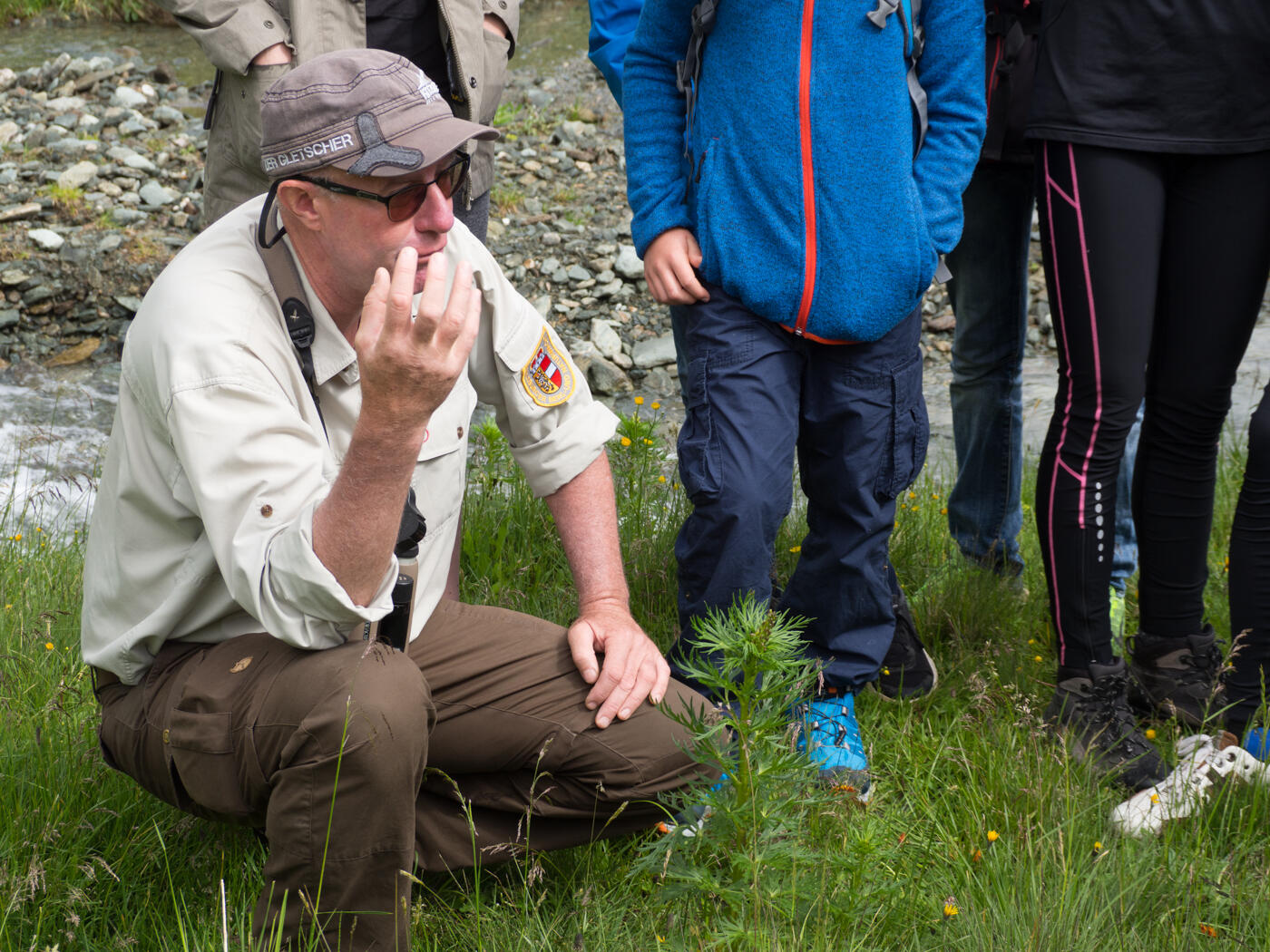
Werner Schuh served as a national park ranger beginning in 2011, introducing guests to the philosophy, flora, and fauna of Hohe Tauern National Park on guided hikes. He also led Explorer Tours at Kitzsteinhorn, taking visitors young and old through four climate zones—from the temperate climate in the valley through the taiga and tundra and up into the Arctic zone.
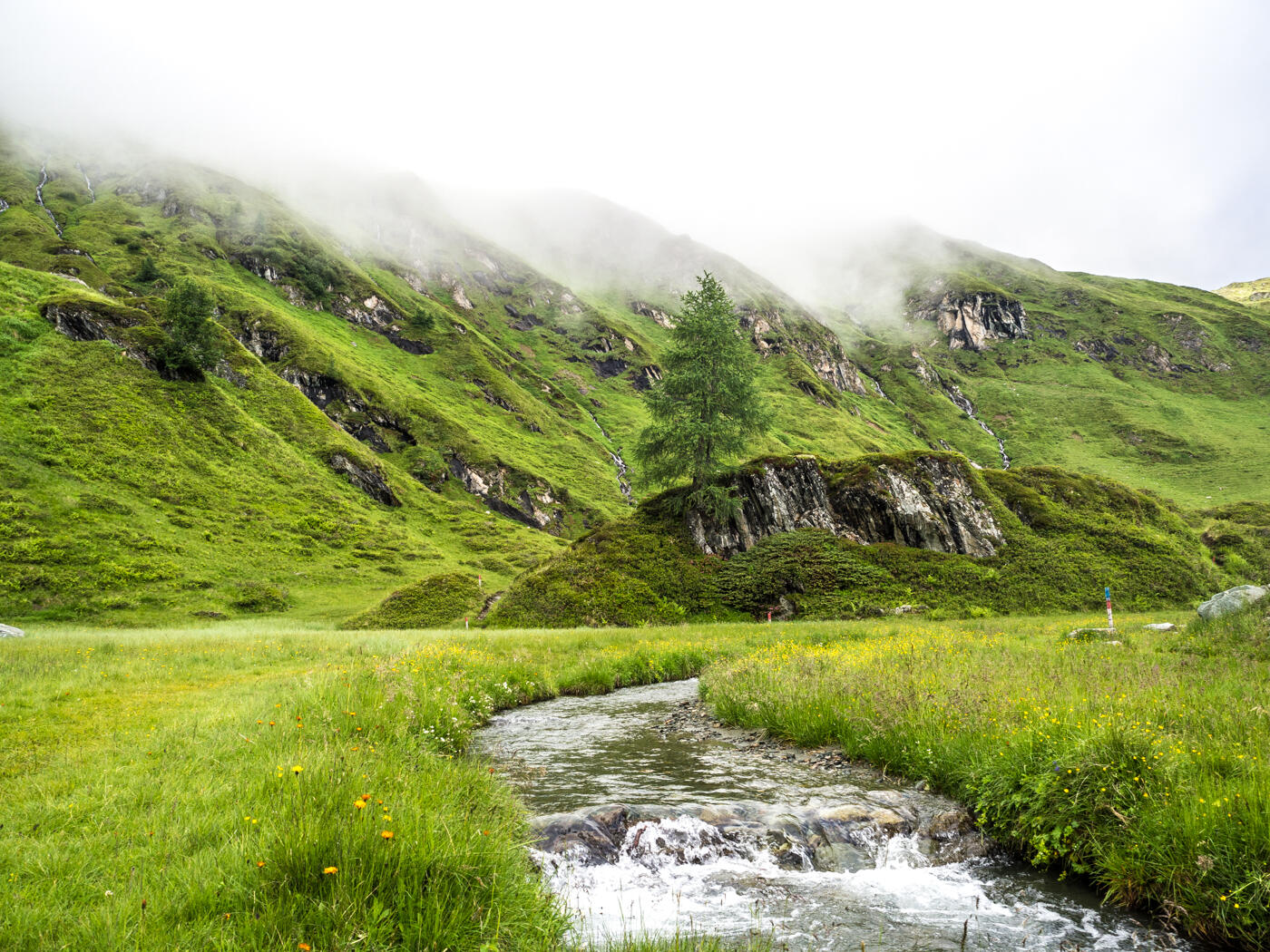
In the valley, the explosion of colorful flowers, trees, and shrubs is a familiar sight. But with every gain in elevation, the landscape changes. It becomes a little more barren, a little more sparsely vegetated, and increasingly exposed to the elements. During a short hike across the green alpine meadows at Langwied, Werner directs our gaze away from the magnificent backdrop of the national park peaks and down toward our feet.
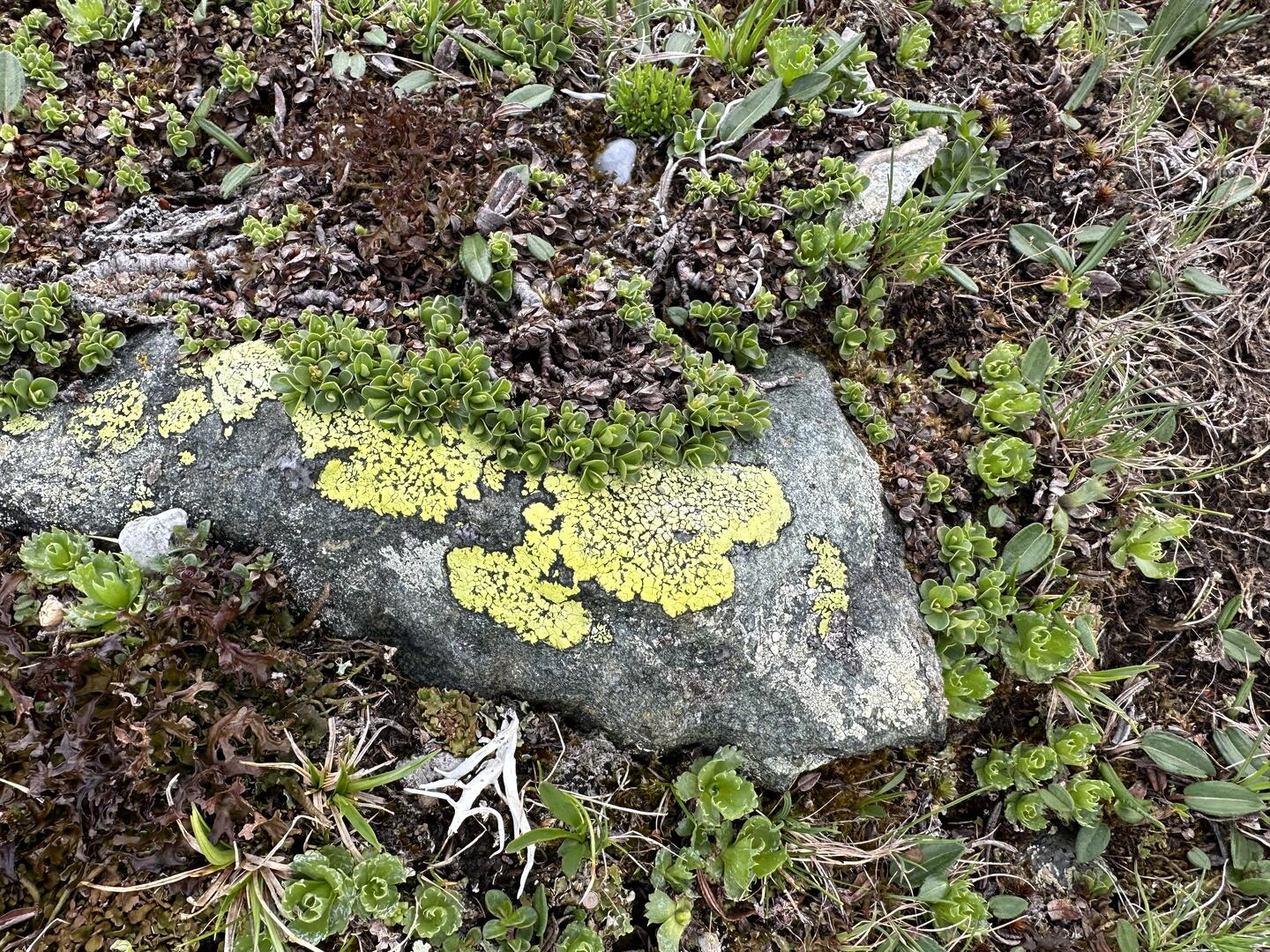
He explains: “This is where the tundra climate zone begins, similar to what you might find in northern Sweden. This area was once the seabed, and the glacier once extended from Lake Zell all the way up to Langwied. Map lichen can reveal how long ago the glacier retreated.” He points out an inconspicuous yellow growth on the exposed rocks.
“By examining the size of map lichens and using site-specific growth rates, glaciologists can estimate when a rock emerged from the ice. Lichens grow extremely slowly.”
Highly poisonous monkshood, hawk’s-beard—a relative of the dandelion—clematis, and cottongrass also grow in the alpine meadows and wetlands around Langwied. Gin lovers will be pleased to know that “Kranawettn,” the local name for juniper, also thrives up here. And the abundance of red clover blossoms reveals where marmots build up their winter fat reserves.
Specialists and Survival Experts
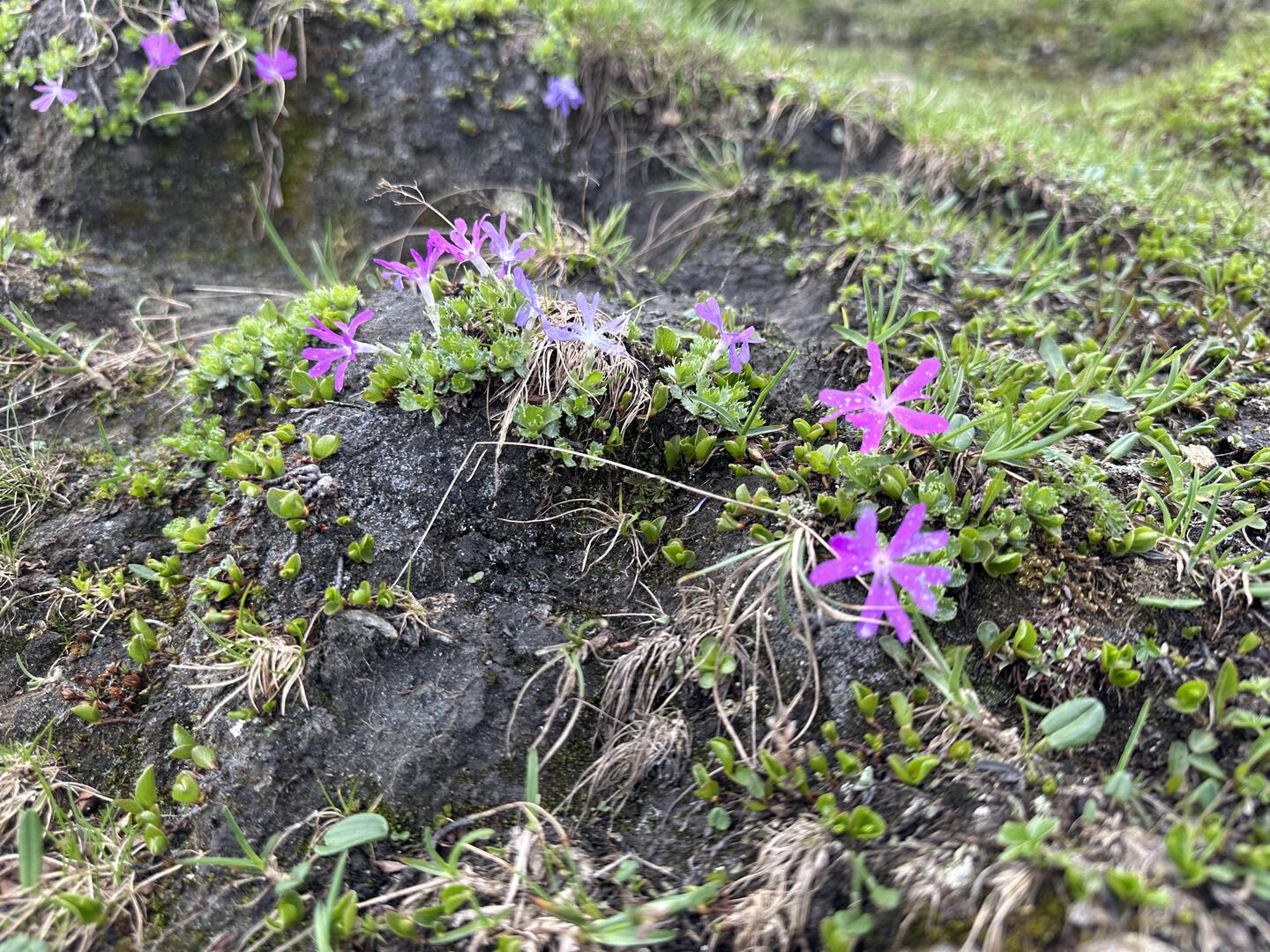
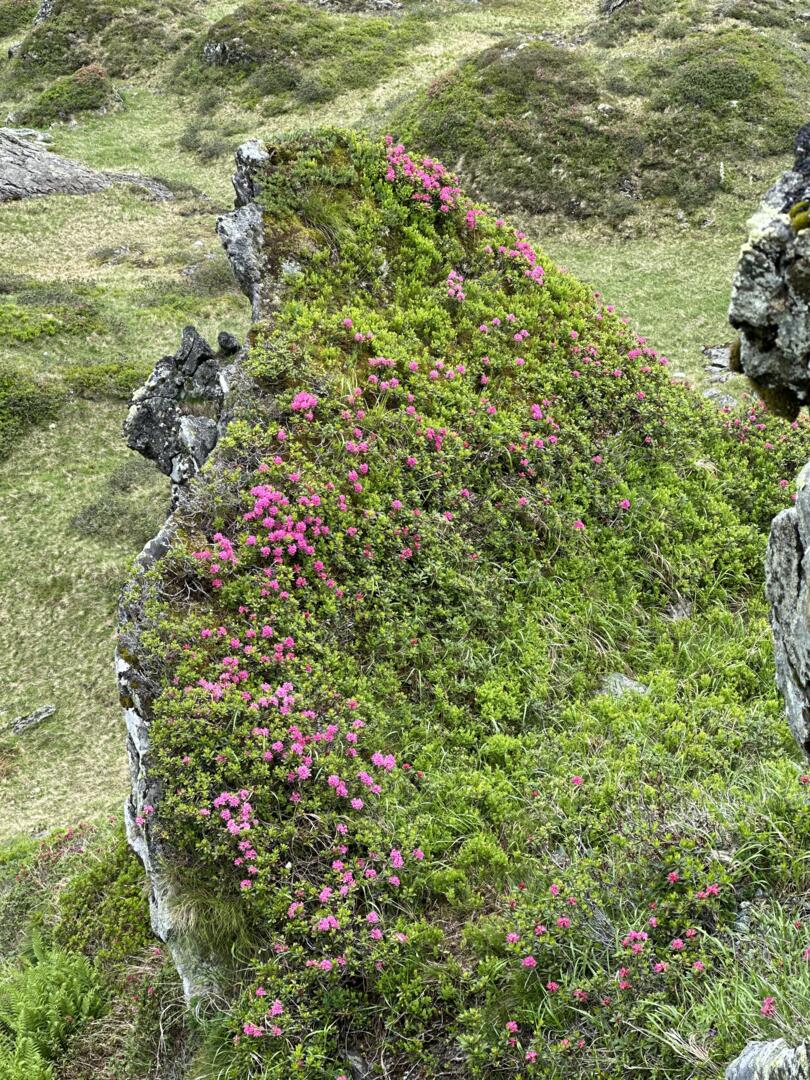
Plants up here generally have to be a little tougher. Snow remains on the ground for a long time, the soil contains fewer nutrients, and temperatures can quickly drop even in summer. These plants are specialists that have developed their own survival strategies, as Werner Schuh demonstrates using a particular species of alpenrose:
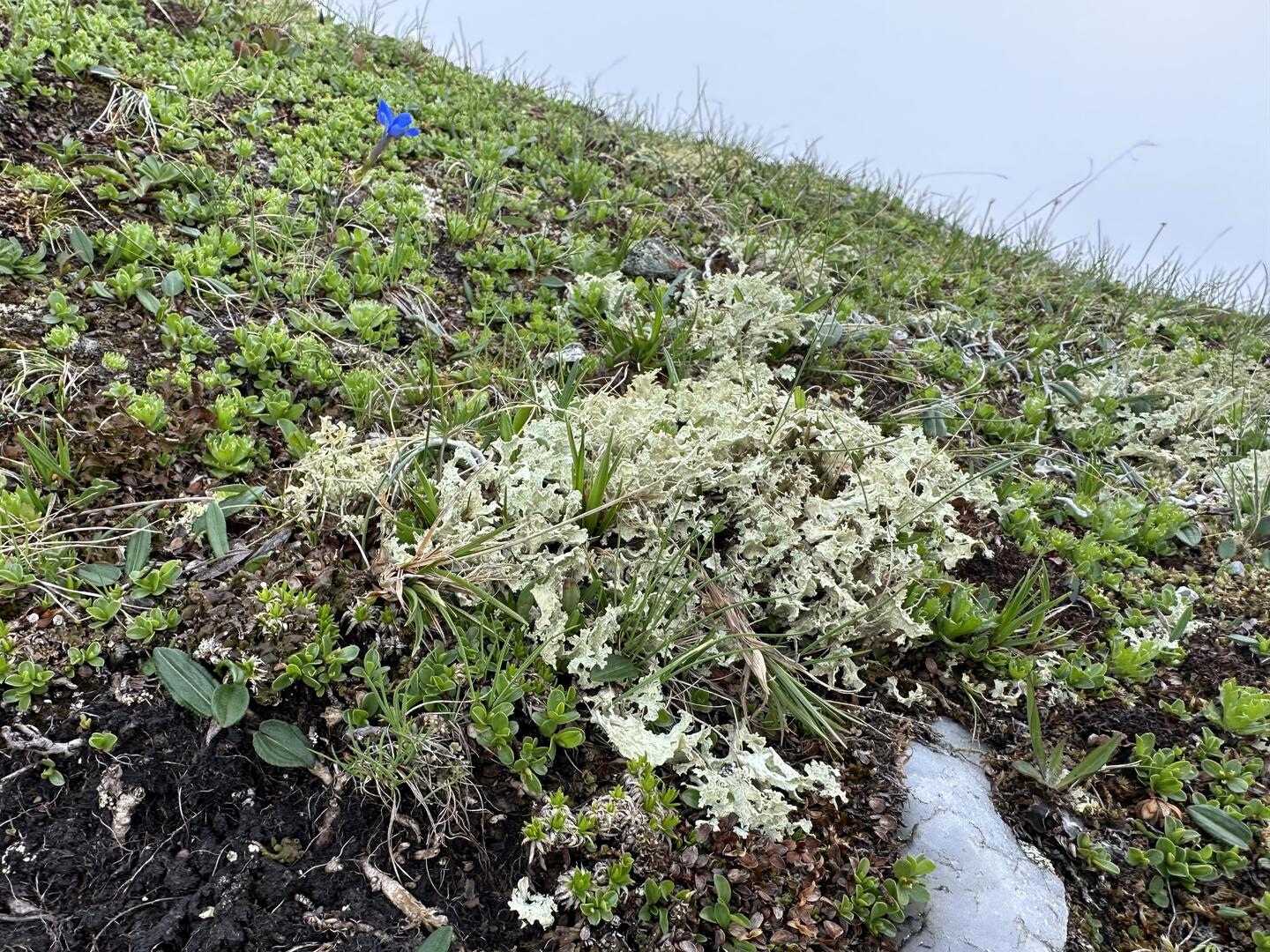
“The hairy alpenrose has fine hairs along the edges of its leaves—hence its name. Like edelweiss and bellflowers, it is adapted to the conditions in this climate zone. White reindeer lichen also grows here, just as it does in northern Sweden, where it provides an important source of food for reindeer.” Werner Schuh laughs and adds: “Reindeer would feel right at home up here.”
Arctic Climate Zone
Beginning at the Alpincenter at around 2,500 meters, the landscape becomes a world of ice and rock. The air feels noticeably cooler even in summer, and the last patches of snow remain in the gullies. Werner Schuh announces: “The world’s smallest tree grows here—the dwarf willow. Most of its trunk grows underground, allowing it to withstand the pressure of snow and wind.”
In restored areas, coconut-fiber netting is spread across the ground to protect newly sown seed from erosion. Curly sedge also helps prevent erosion. It reproduces clonally, and individual stands can be around 2,000 years old.
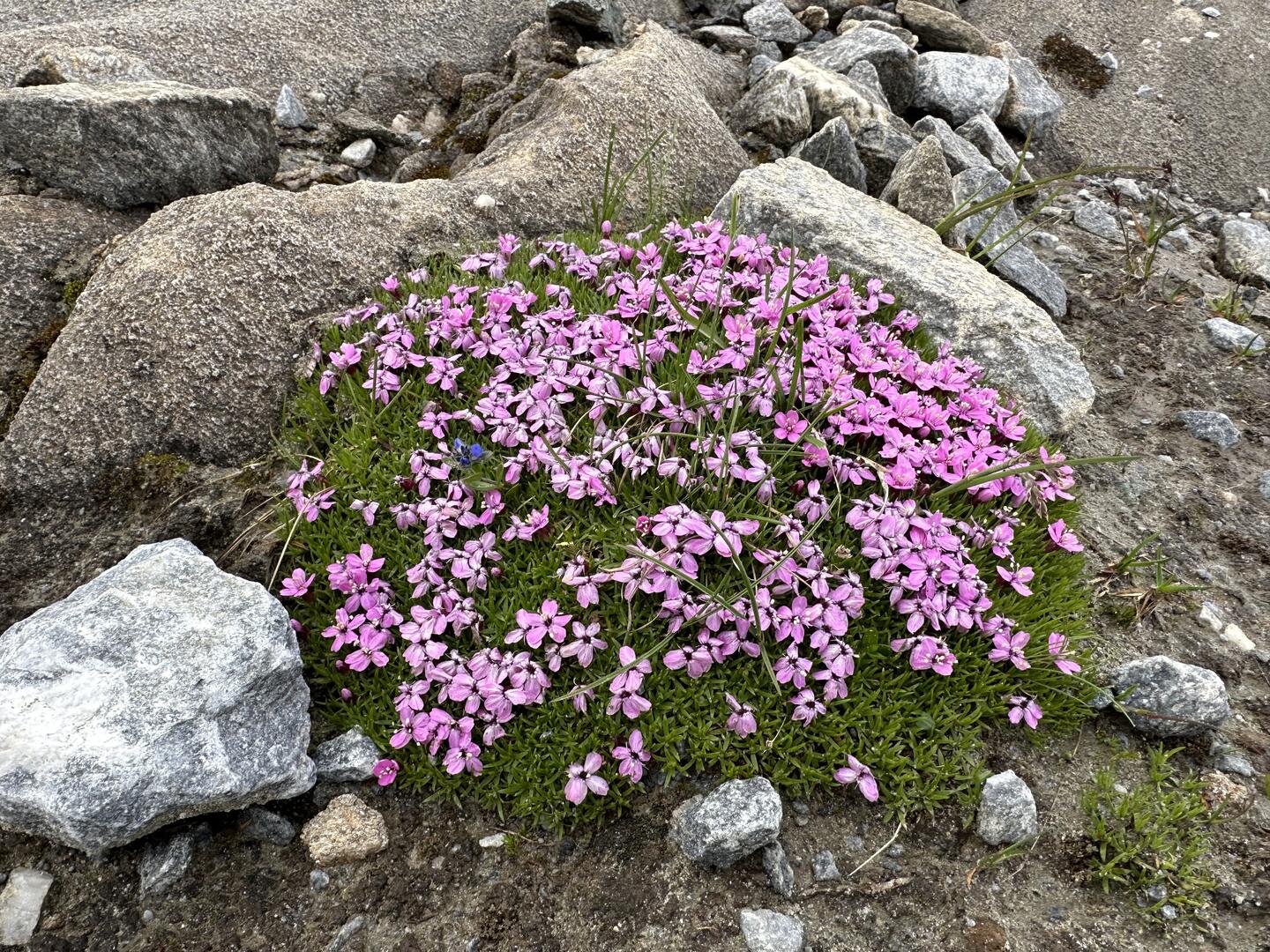
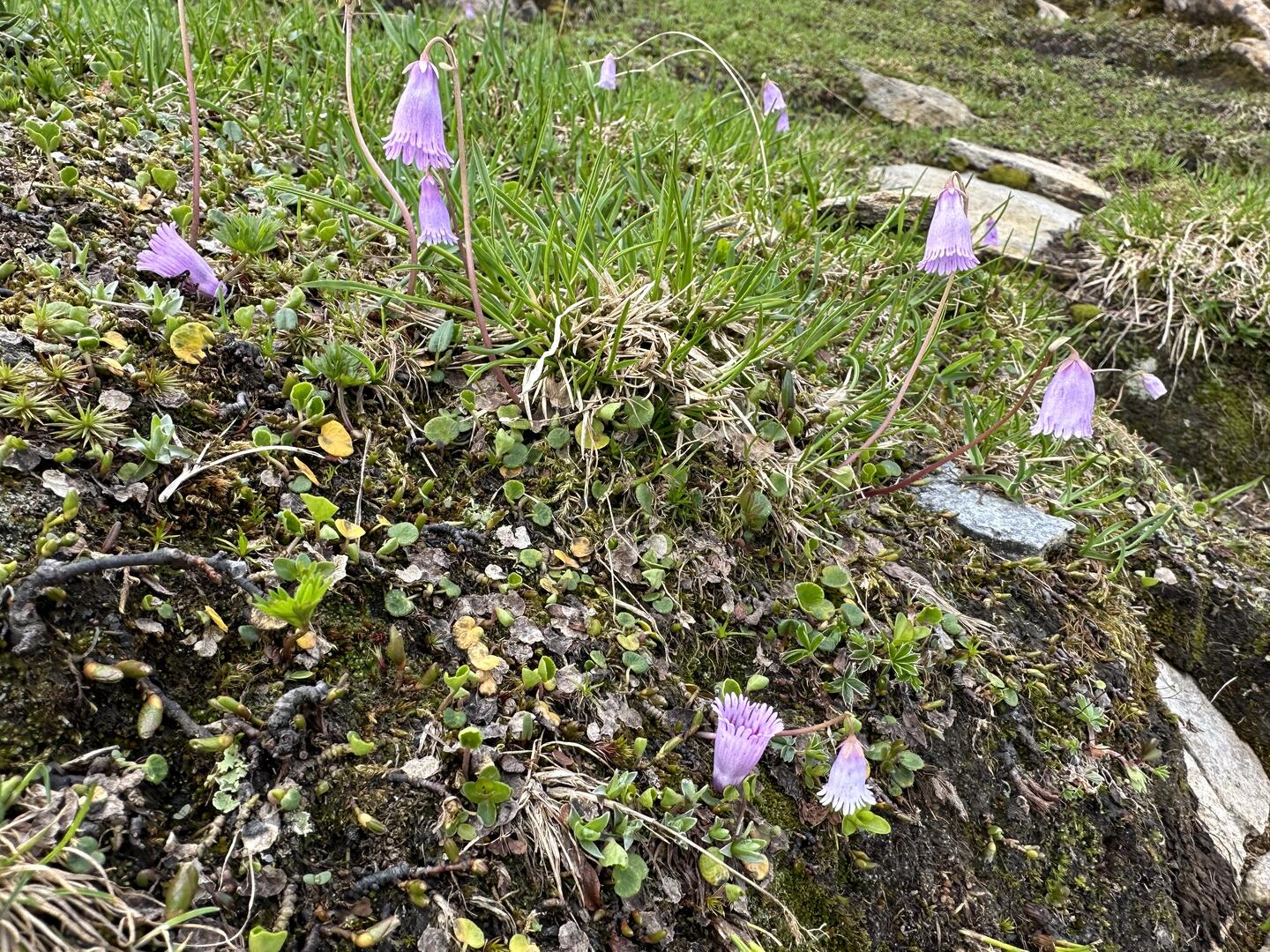
Up here begins a sensitive habitat. At first glance, all you see is gray rock. But through a macro lens, it quickly becomes clear that even here, at the edge of the glacier ice, there is a remarkable abundance of flowers. We carefully watch where we place our feet to avoid damaging the tiny plants.
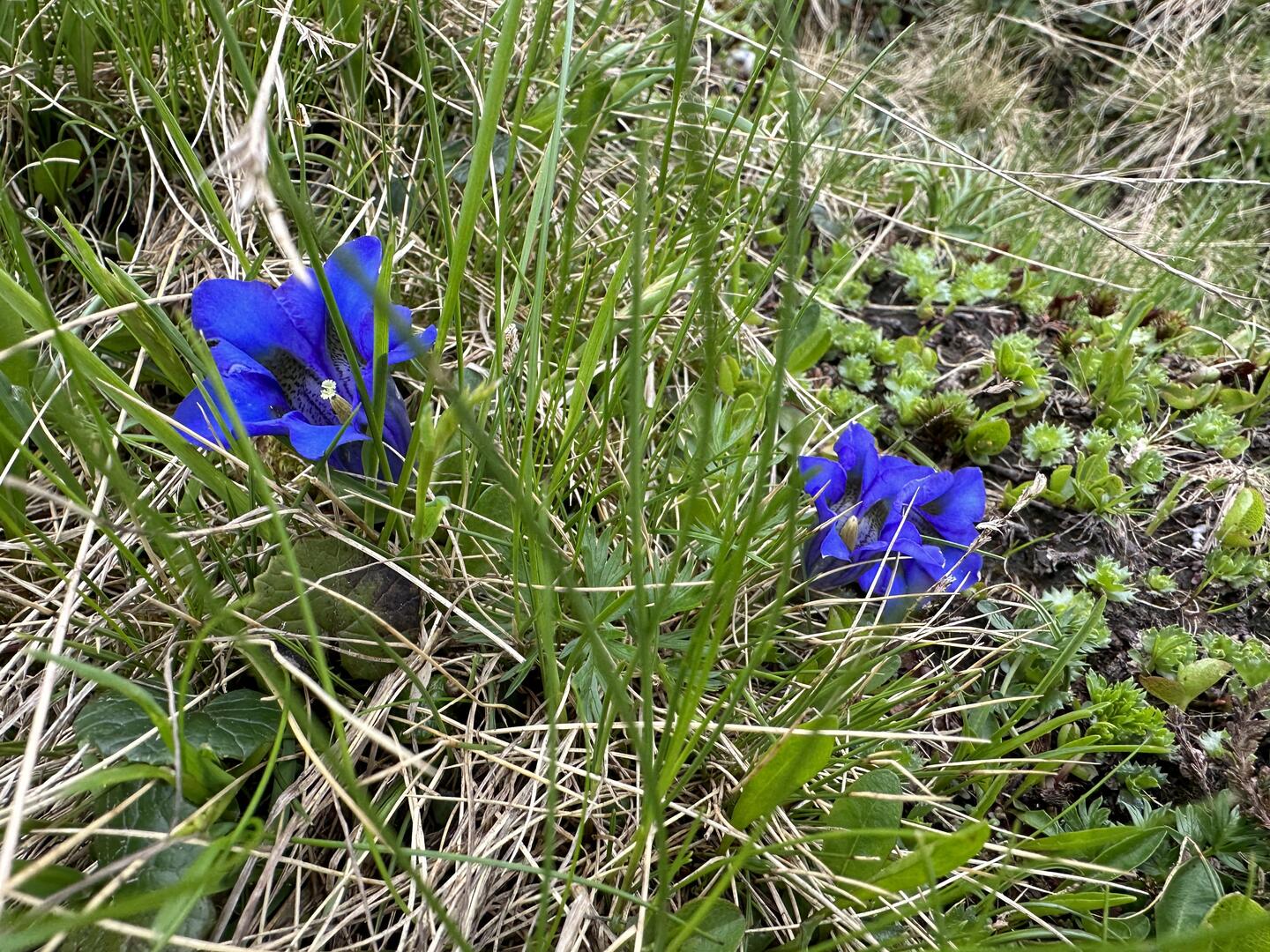
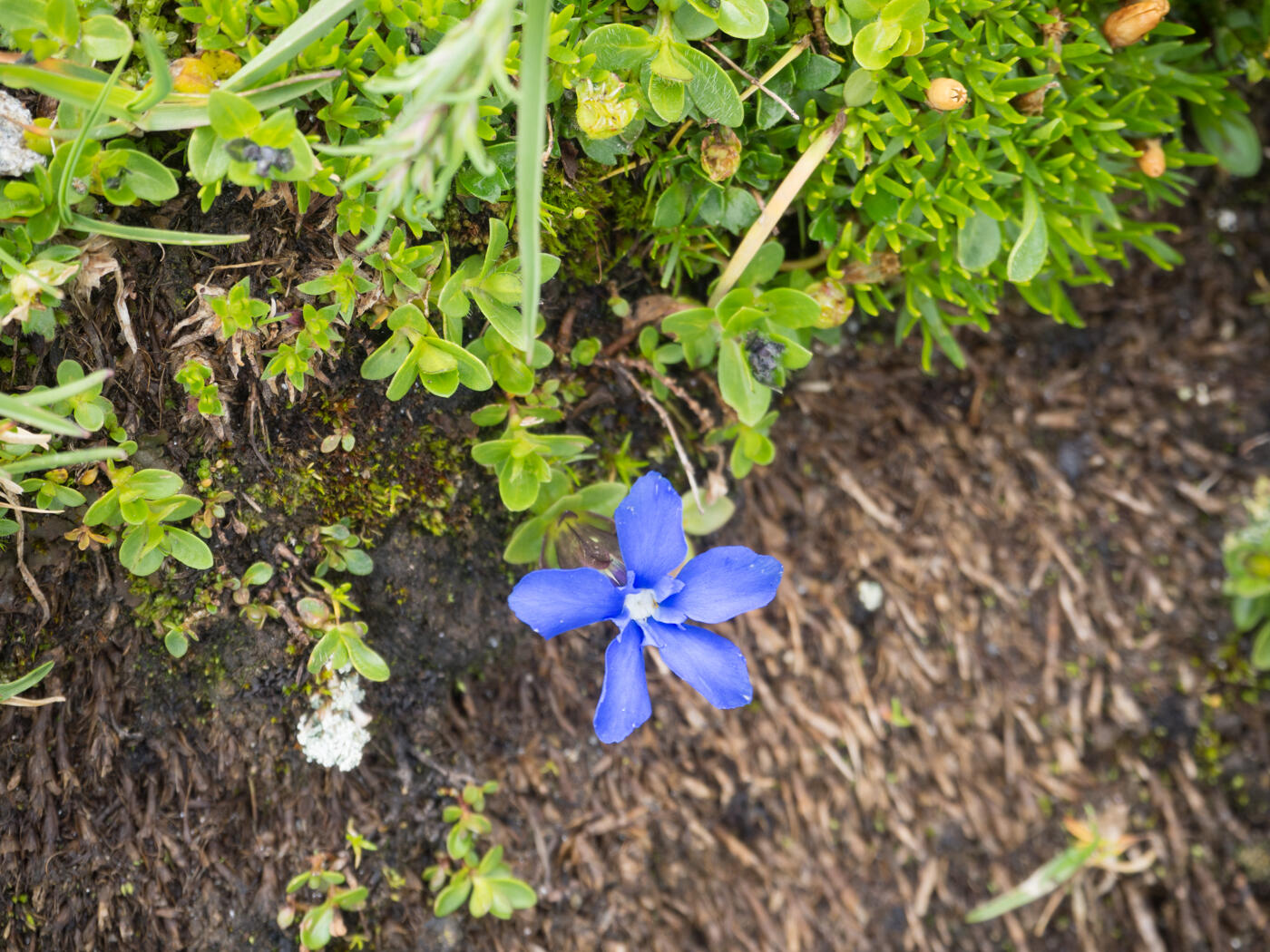
Alongside spring gentians and lichens, we repeatedly encounter white cushions of saxifrage. This genus is perfectly adapted to the cold climate zone. It grows in cracks in the rock, which is how it earned its name—it often looks as though the plant has split the stone apart. Higher up, at elevations reaching 3,000 meters, the rare Rudolphi saxifrage thrives, blooming a rich purple-red from April through July. Perennial mouse-ear also grows around the summit in this Arctic climate zone.
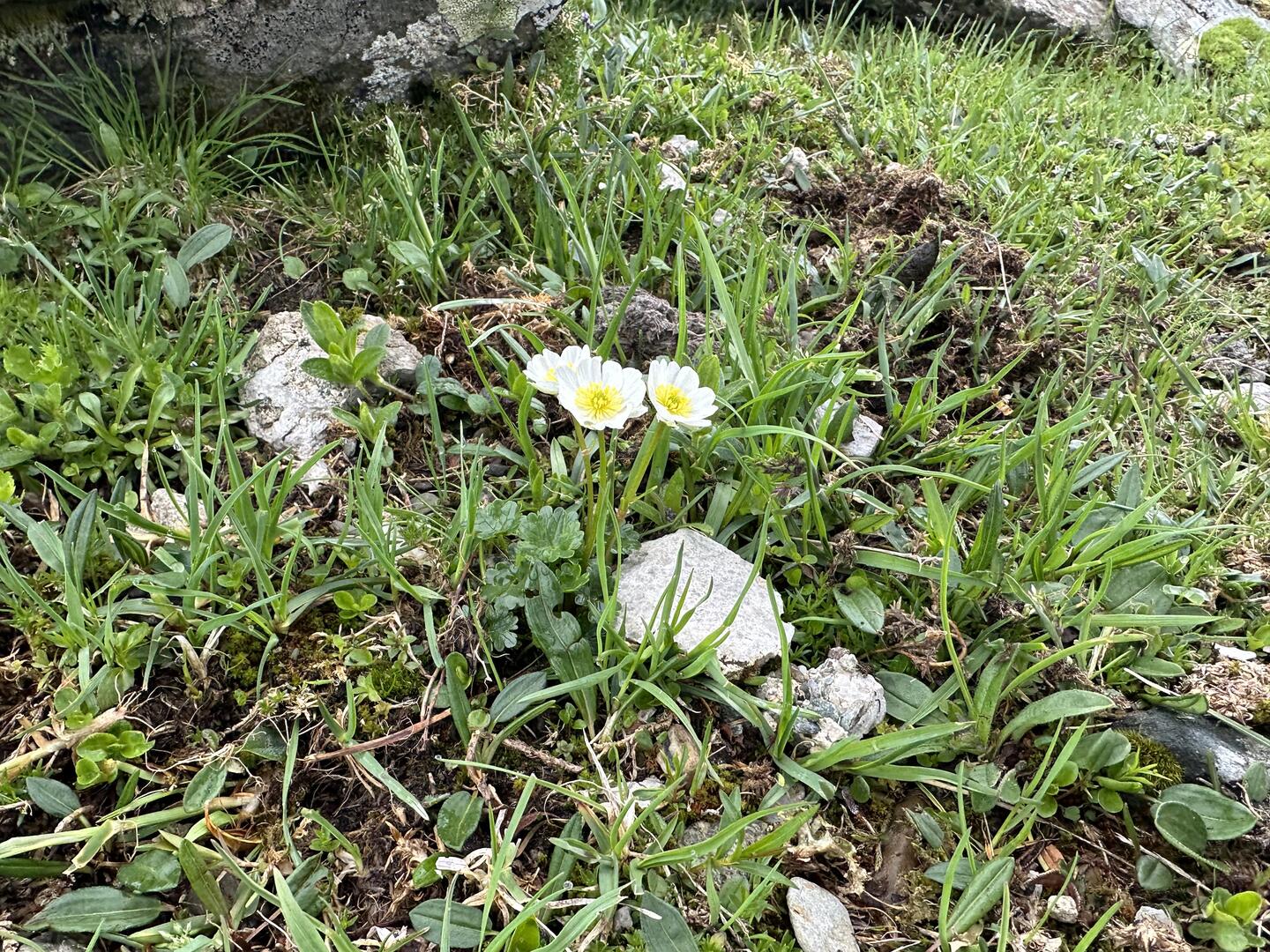
Our eyes are now trained on the details, and we have almost forgotten the magnificent view. But during a stop at Gipfel Restaurant, we can once again let the sweeping panorama take center stage. Through these excursions into the sensitive high-alpine habitat, Kitzsteinhorn educates numerous visitors each year. Those who are aware of their surroundings and understand the challenges of this climate zone are more likely to respect nature and treat its flora and fauna with care.
The Kitzsteinhorn Explorer Tour is offered seasonally in summer and winter and is accompanied by a national park ranger. Current dates, prices, and registration information can be found on the Kitzsteinhorn Explorer Tour page.