

Hydropower at Kitzsteinhorn
At Kitzsteinhorn, the Grubbach hydropower plant harnesses the power of water to generate clean electricity. Three turbines now provide renewable energy. In the fall, the system switches roles, transforming from a hydropower plant into a pumping station that draws water from the high-alpine reservoirs for snowmaking.
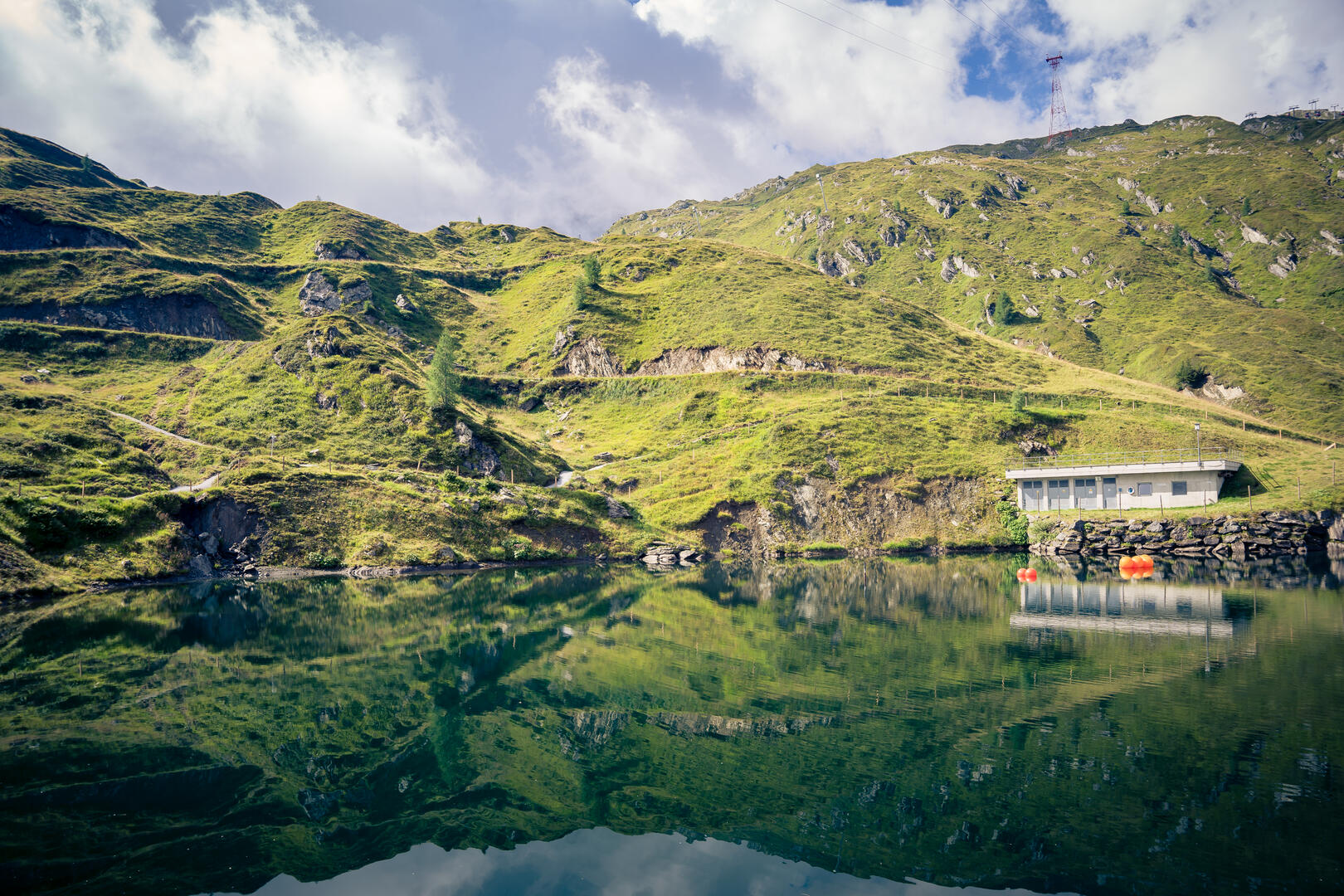
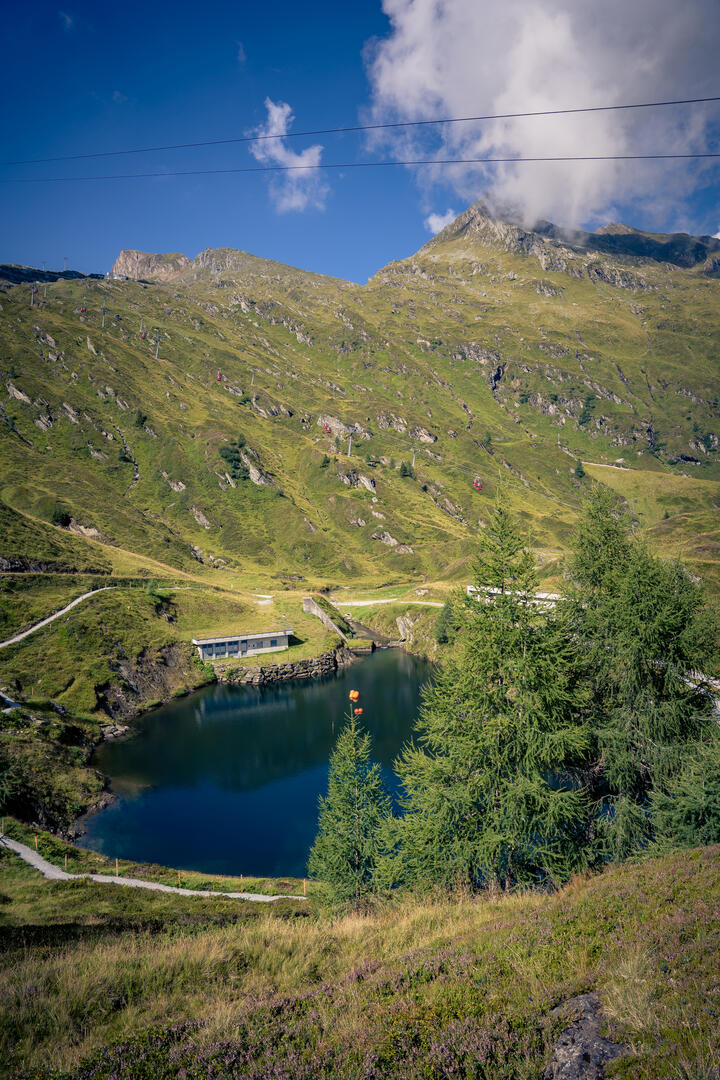
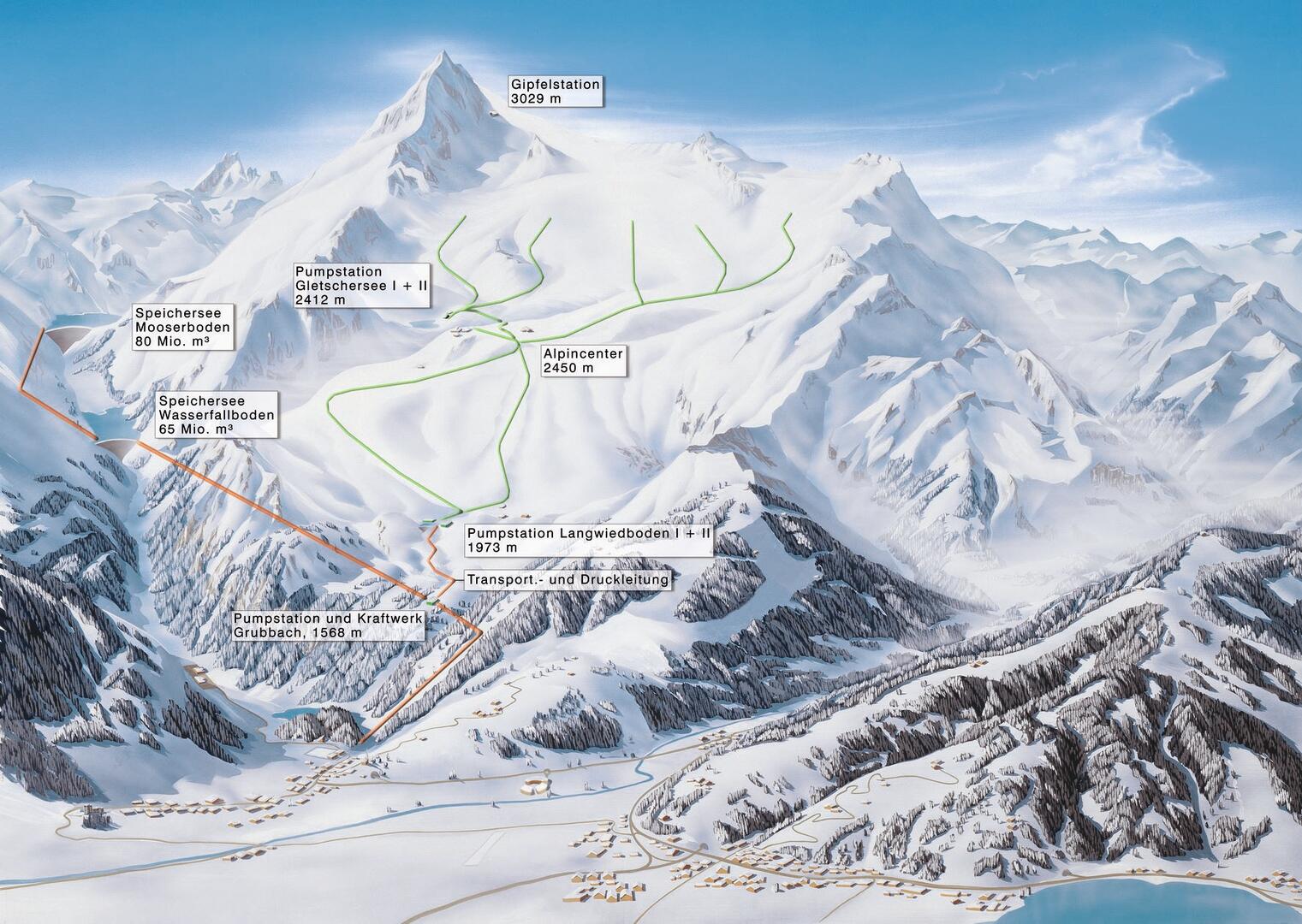
“Let it flow!” echoes across Langwied, and masses of water begin rushing from the storage pond through the pipes and down the mountain. Meltwater and rainwater are collected in the small storage pond next to the Gletscherjet 1 upper station and used to generate electricity at the Grubbach hydropower plant, 460 vertical meters below.
Water Comes Full Circle
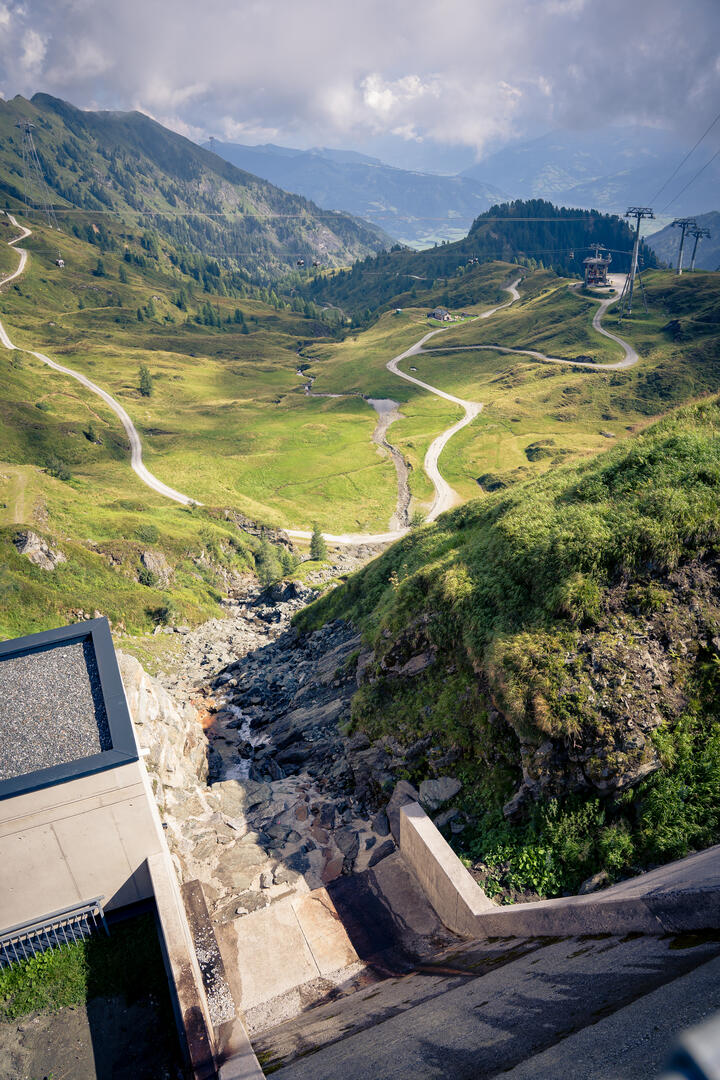
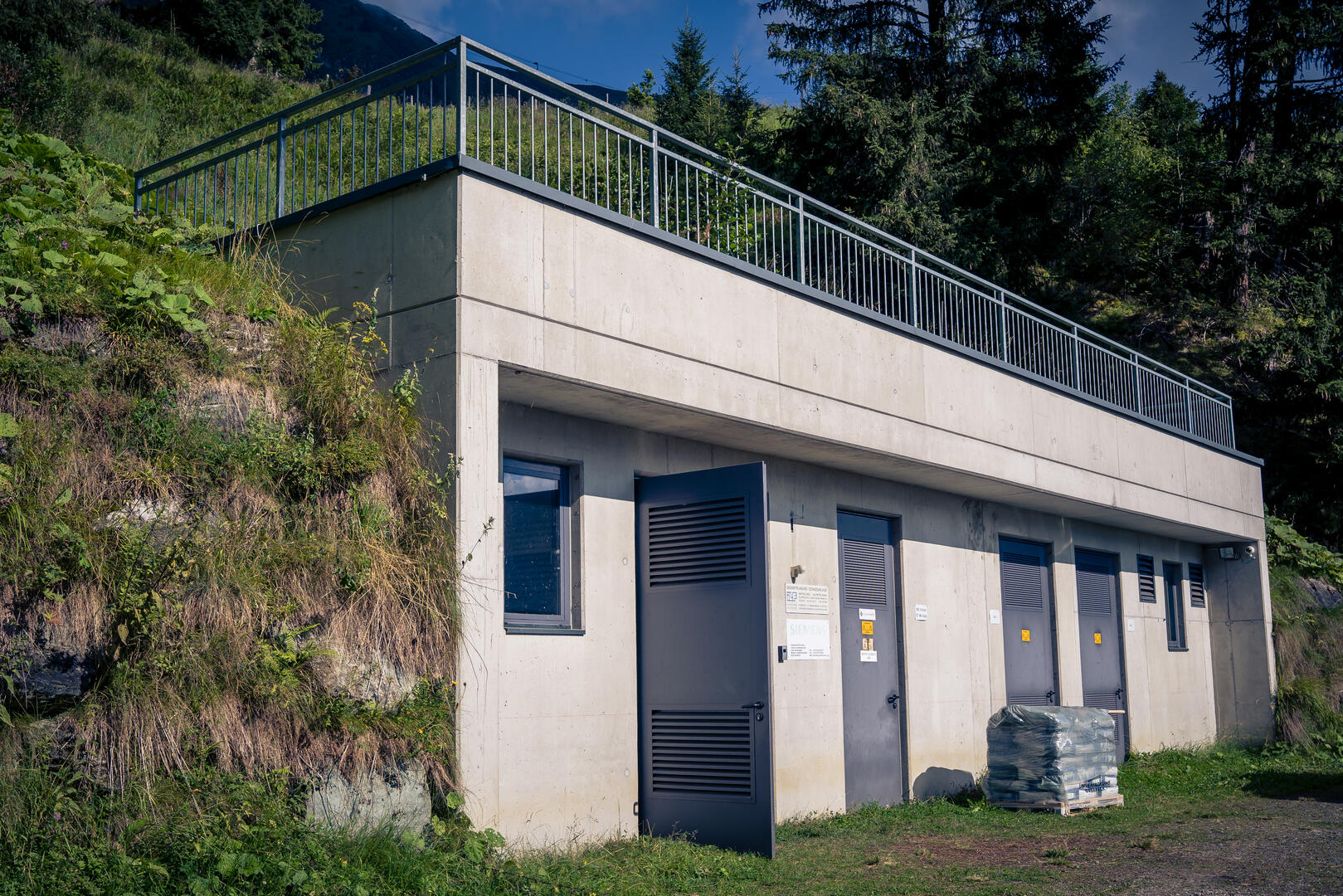
The water rushes through a two-kilometer-long pipeline to the Grubbach power plant below. The inconspicuous facility is hardly recognizable as a power plant. It consists of an engine room and control center housed in a small operations building away from the trail.
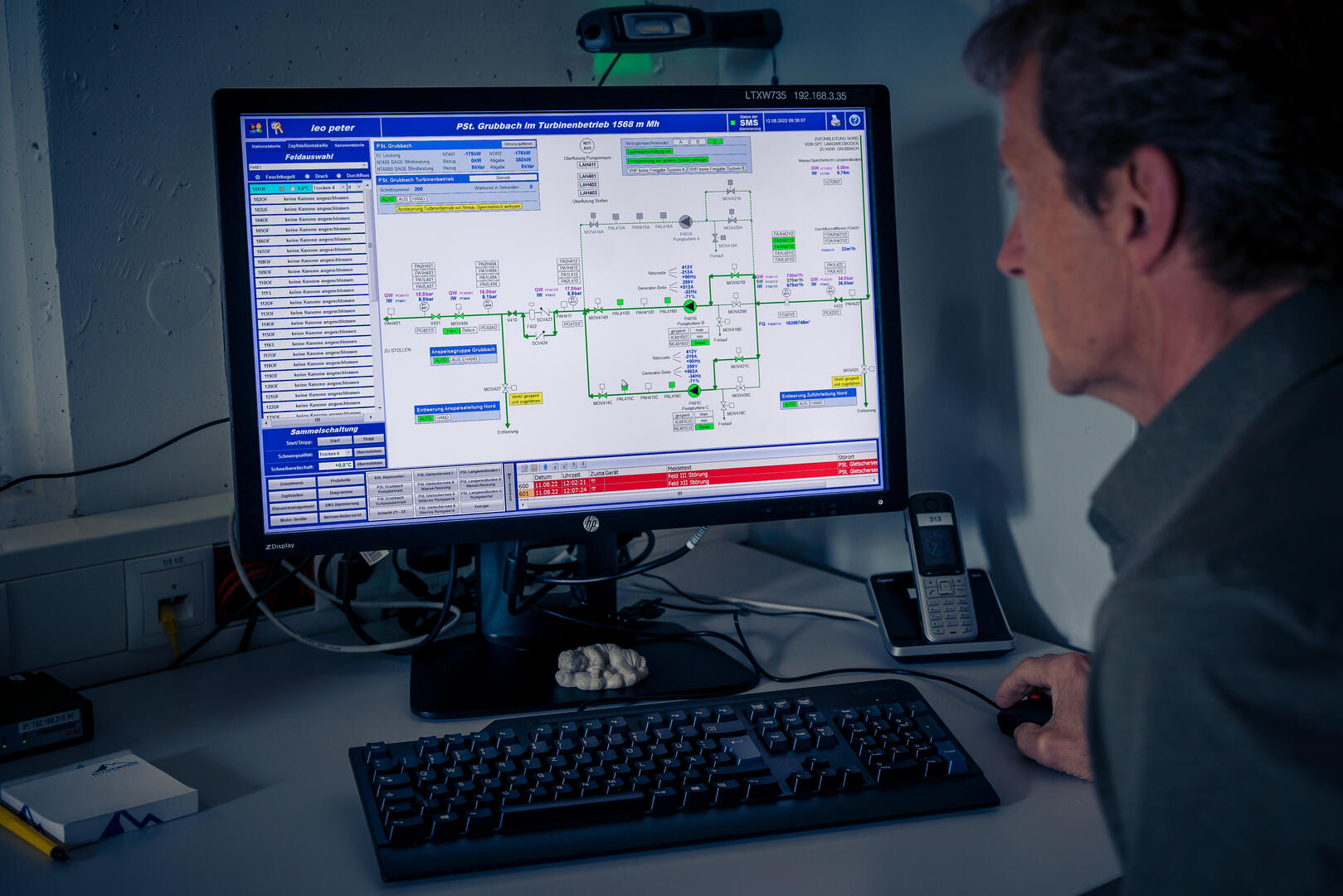
Inside, it makes an important contribution to Kitzsteinhorn’s sustainable water cycle, as Peter Leo, Head of Snowmaking, explains:
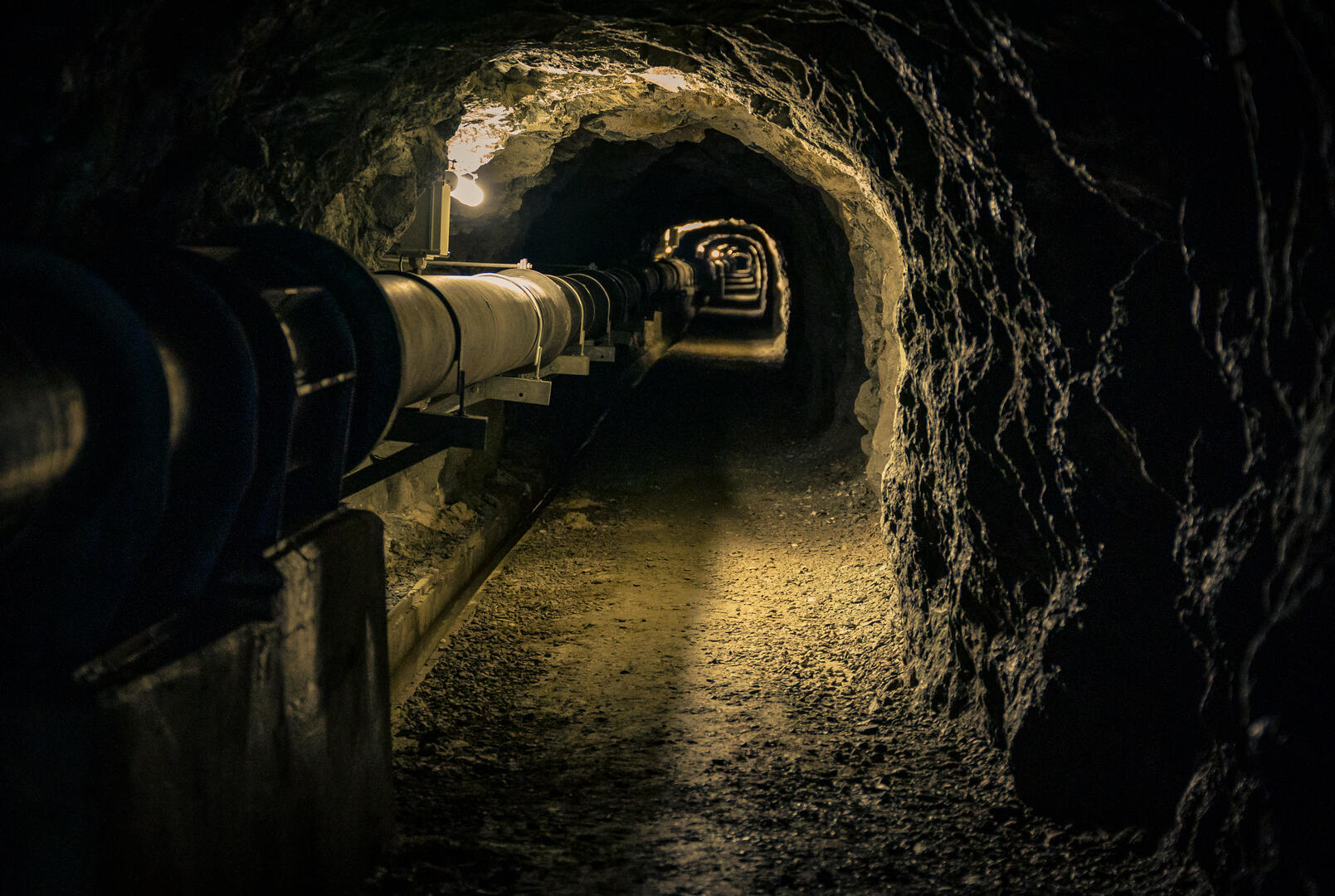
“The combined Grubbach pumping and hydropower plant was built in 2012 and was originally equipped with two turbines. It is located directly at the outlet of the water tunnel leading to the high-alpine reservoirs, which was built in the 1940s. This tunnel gives us access to the water reserves of the Wasserfallboden and Moserboden reservoirs.
When the first cold spell arrives in the fall, we can transform the power plant into a pumping station at the push of a button. The water then flows through the tunnel of the Kaprun Main Stage power plant and the pumping station directly to the snowmaking system. By using Kaprun’s large high-alpine reservoirs, we can draw water for snowmaking in the fall. Meltwater and rainwater are also collected in the Langwied storage pond.”
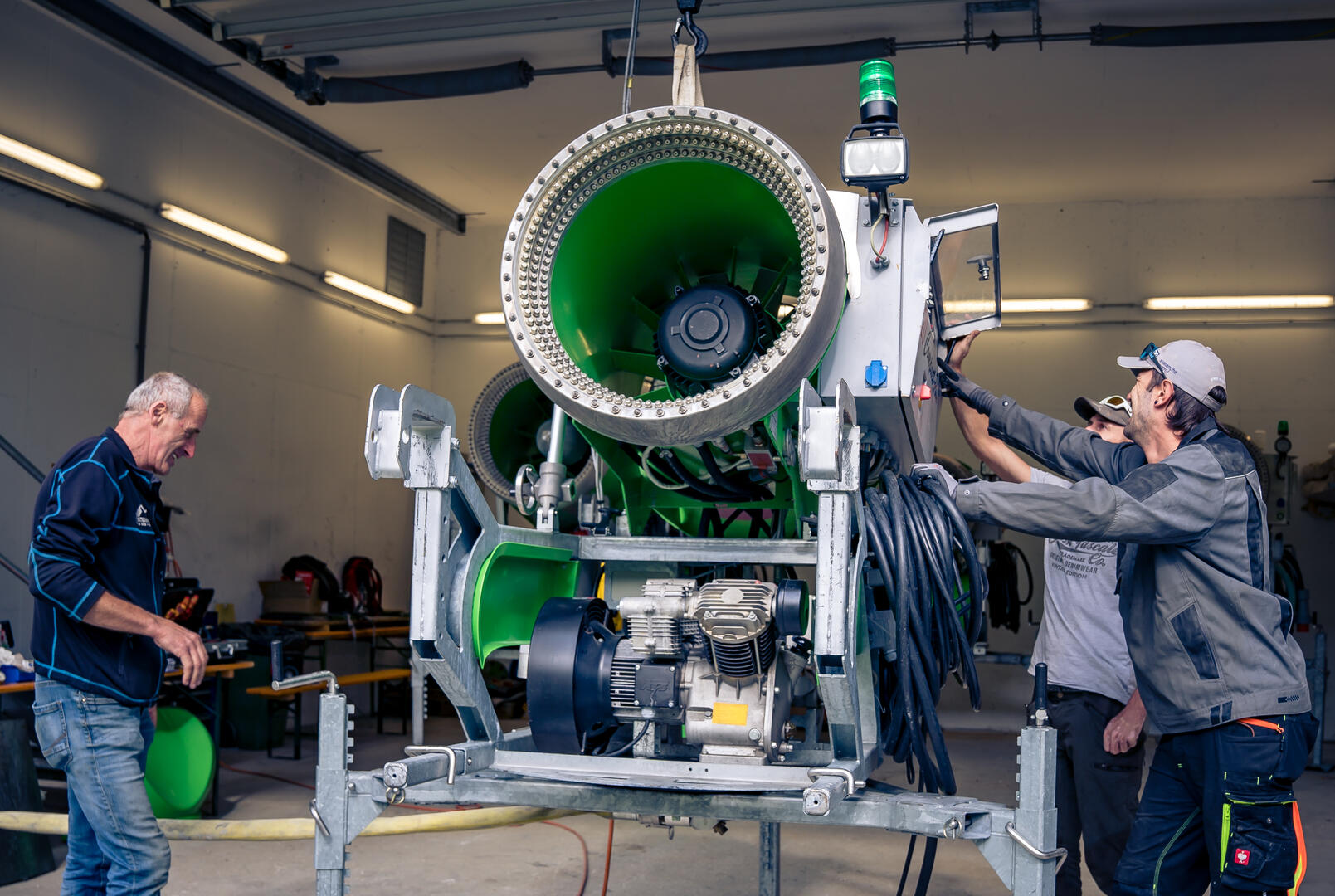
Snowmaking machines help ensure reliable snow conditions at Kitzsteinhorn. Peter Leo and his team are currently carrying out maintenance work on the state-of-the-art snowmaking equipment.
“We inspect the performance of every machine during the summer. This allows us to begin operating highly efficiently and with minimal use of resources as soon as temperatures drop sufficiently in the fall,” he explains.
By using Kaprun’s large high-alpine reservoirs, we can draw water for snowmaking in the fall. Meltwater and rainwater are also collected in the Langwied storage pond.
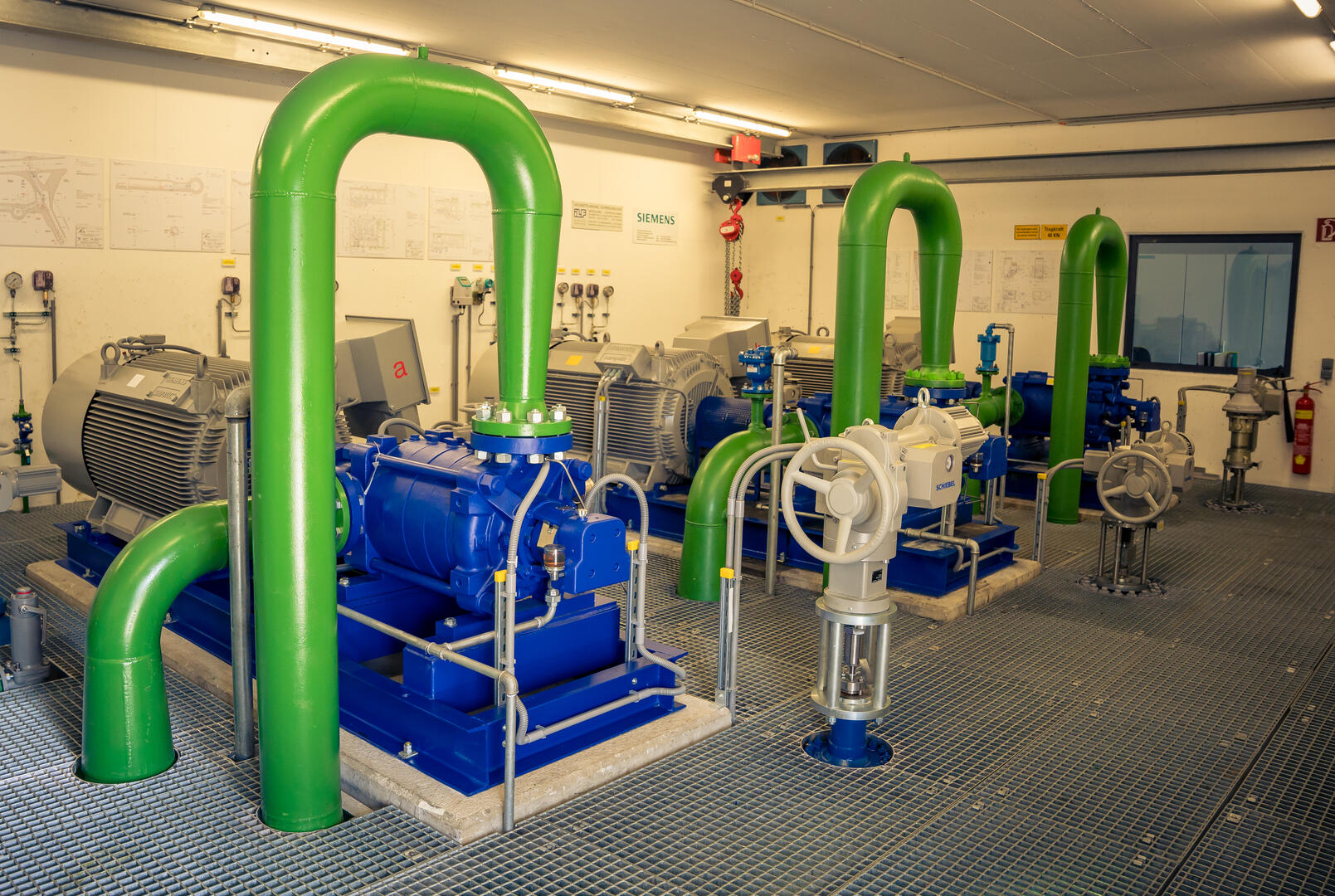
Meanwhile, the control center of the hydropower plant is filled with the reassuring hum and whir of machinery. The turbines have long since begun operating, as the water completes its journey from Langwied in just ten minutes.
Every second, 300 liters of meltwater and rainwater pass through the turbines to generate electricity.
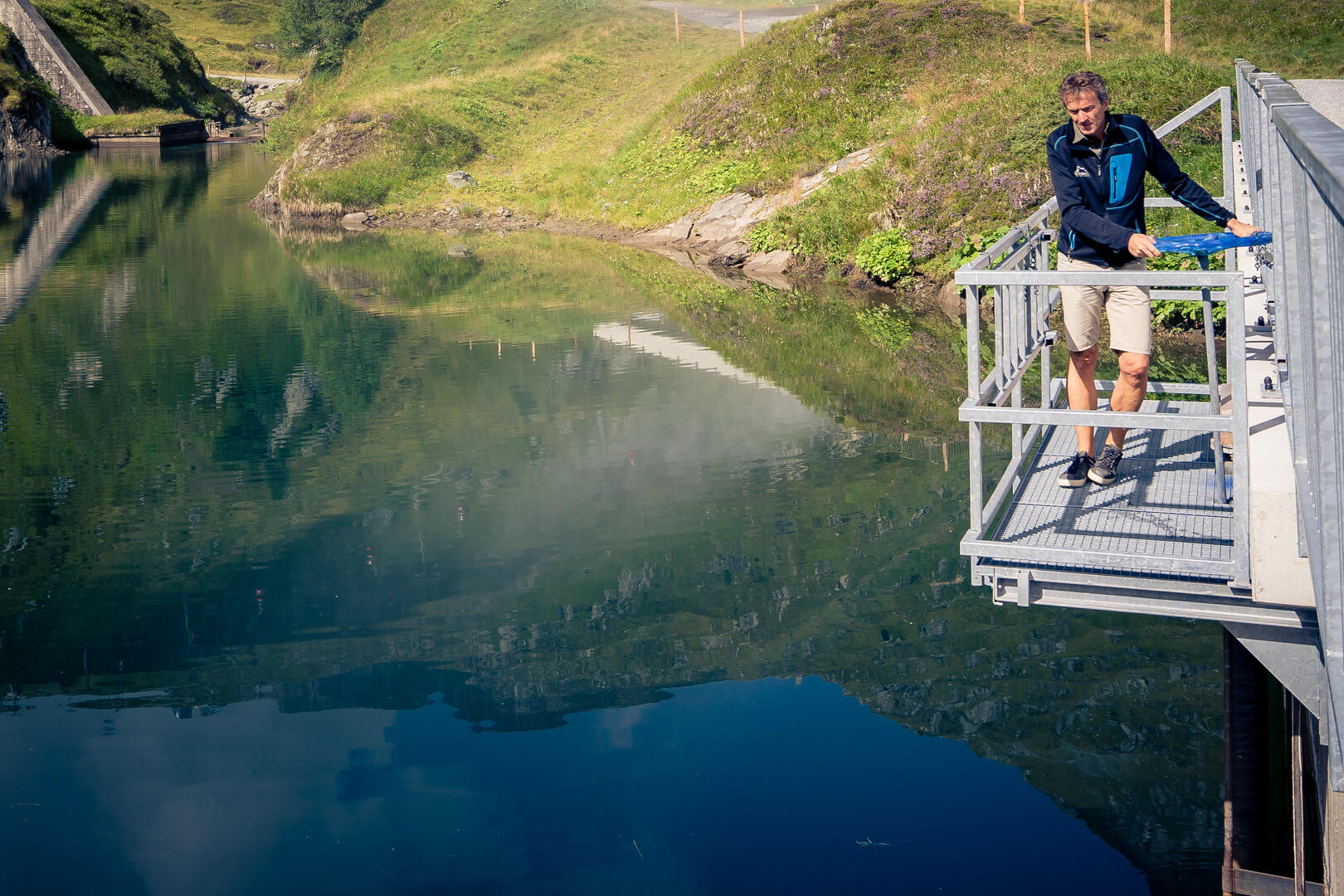
“It is an efficient and sustainable cycle,” explains Günther Brennsteiner, Authorized Technical Officer:
“The meltwater from Kitzsteinhorn is converted into electricity, and in the fall that electricity helps power the pumping station used for snowmaking. With the third turbine, we can now generate around 1.3 million kWh of electricity per year. This covers approximately 33 to 35% of the total energy required for snowmaking at Kitzsteinhorn—an extremely positive contribution to our energy balance.”
| Category | Facts |
|---|---|
| Built in | 2012 |
| 3rd turbine installed | 2022 |
| Capacity | 300 liters per second, 660 kW |
| Annual electricity generation | around 1.3 million kWh |
| Summer operation | Electricity generation using meltwater and rainwater |
| Fall operation | Pumping station for snowmaking |