

Kaiserschmarrn at Kitzsteinhorn
Sweet, fluffy, lightly caramelized, and irresistibly fragrant—this beloved mountain-restaurant classic from Austria’s pastry tradition instantly brings back fond memories of ski vacations. Werner Köhler, Executive Chef at Kitzsteinhorn, reveals why his Kaiserschmarrn at the Marktstraße food court is so wonderfully fluffy and why locally sourced ingredients and freshly prepared food matter so much to him.
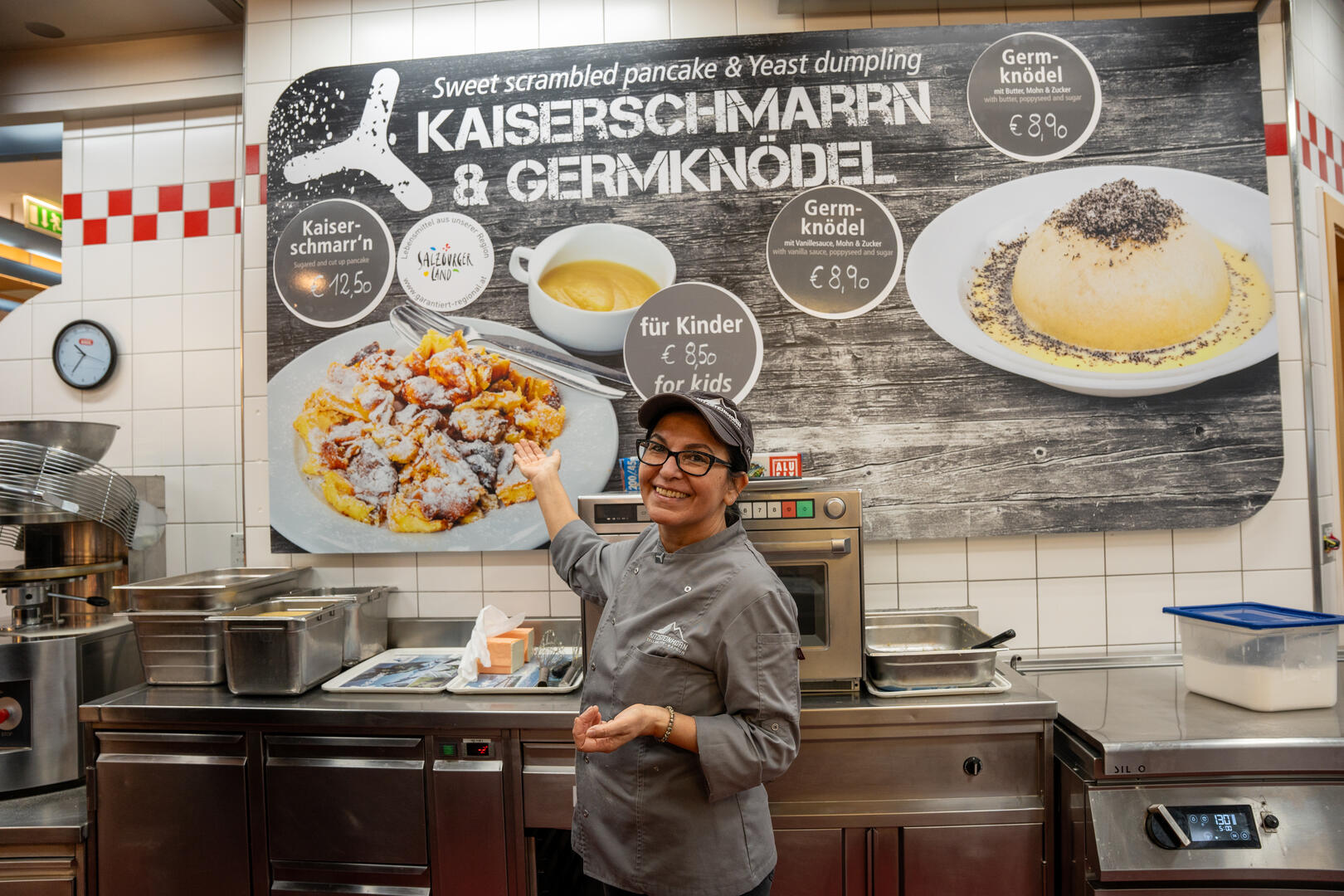
Kaiserschmarrn: A Favorite Mountain Dish
Whether it is an elegant carving turn, a dynamic short-radius turn, or a weightless powder turn, the turn toward a mountain restaurant may well be every winter sports enthusiast’s favorite after exhilarating runs across Kitzsteinhorn’s expansive glacier slopes. And at the very top of the list of popular mountain dishes is Kaiserschmarrn. Guests savor this sweet finale to their ski day with a clear conscience, because the main ingredients used to make it come directly from the region.
Werner Köhler has been working his culinary magic at the Alpincenter for many years. The experienced Executive Chef explains:
“Here at an elevation of 2,450 meters, we do not only cook for the modern self-service restaurant and its market-style food stations. We also prepare dishes for the table-service Restaurant Gletschermühle, while our in-house pastry kitchen supplies Gipfel Restaurant. That requires excellent logistics and a well-coordinated team.”
We are proud to be able to cook with the finest locally sourced ingredients.
Slow Food, Served Fast
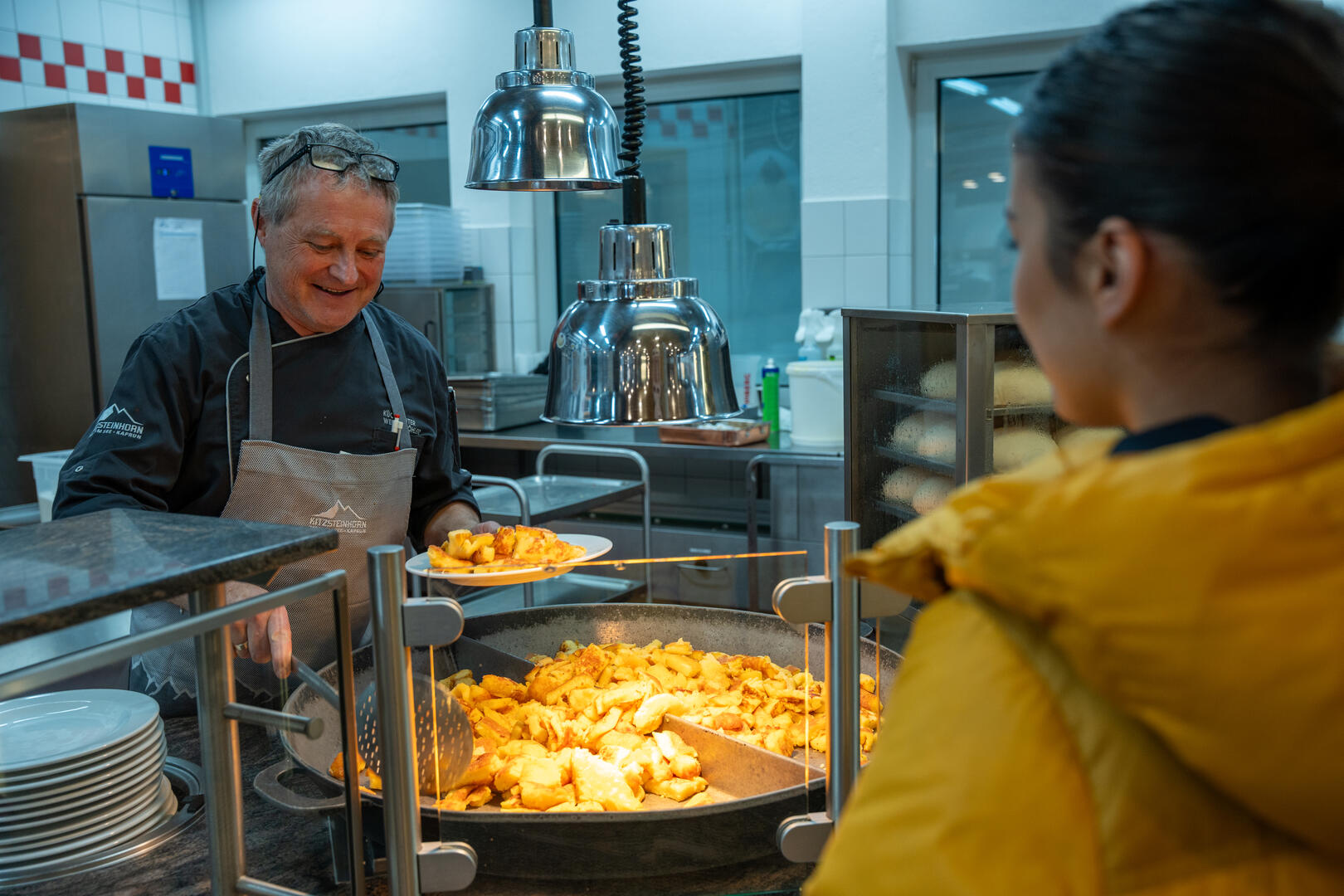
The aromas of the dishes are already drifting from the food stations: Tyrolean Gröstl with a fried egg, pasta, pizza, salads, and Kaiserschmarrn. A small line has already formed, and one serving after another is handed to hungry skiers, who take their first bites of the sweet dish with delighted expressions.
“What is the secret to this fluffy texture?” we ask Werner Köhler. Without hesitation, he invites us into the main kitchen to watch him prepare it.
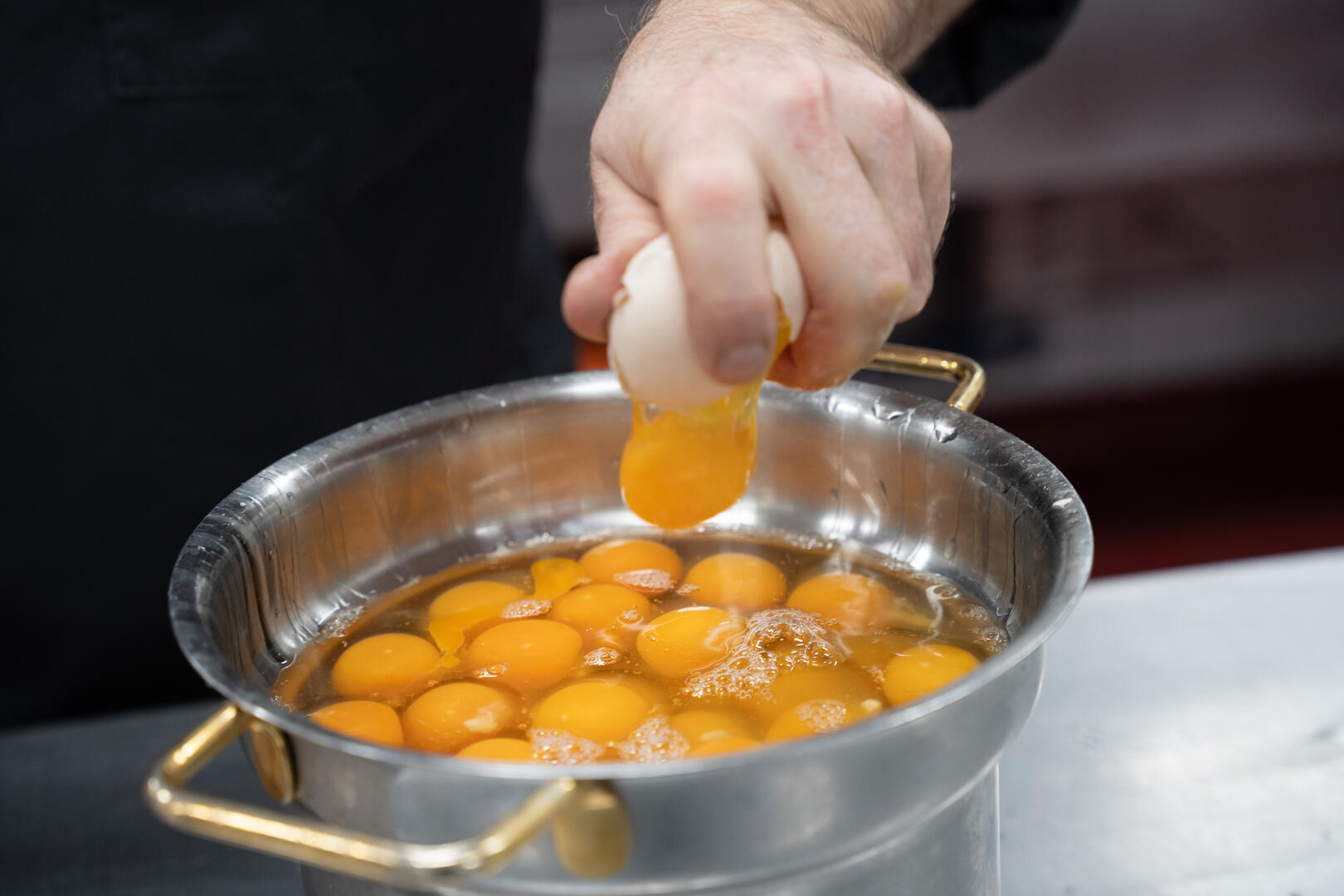
Fluffiness Takes Time
“The secret lies partly in the excellent local ingredients. We use SalzburgerLand eggs from Waldhof Kösslergut farm in Lungau and fresh whole milk from the Pinzgau Milch dairy. And, of course, we cook everything fresh and do not use any stabilizers or additives in our restaurants.
“The other secret is the time we give our food during preparation. Service may need to be fast for winter sports enthusiasts, because many of them want to get back out on the slopes as quickly as possible, but that does not apply to the cooking process. We give our dishes the time they need. A soup may simmer overnight, dough is allowed to rest long enough to develop properly, and the Kaiserschmarrn batter also needs time to rest.”
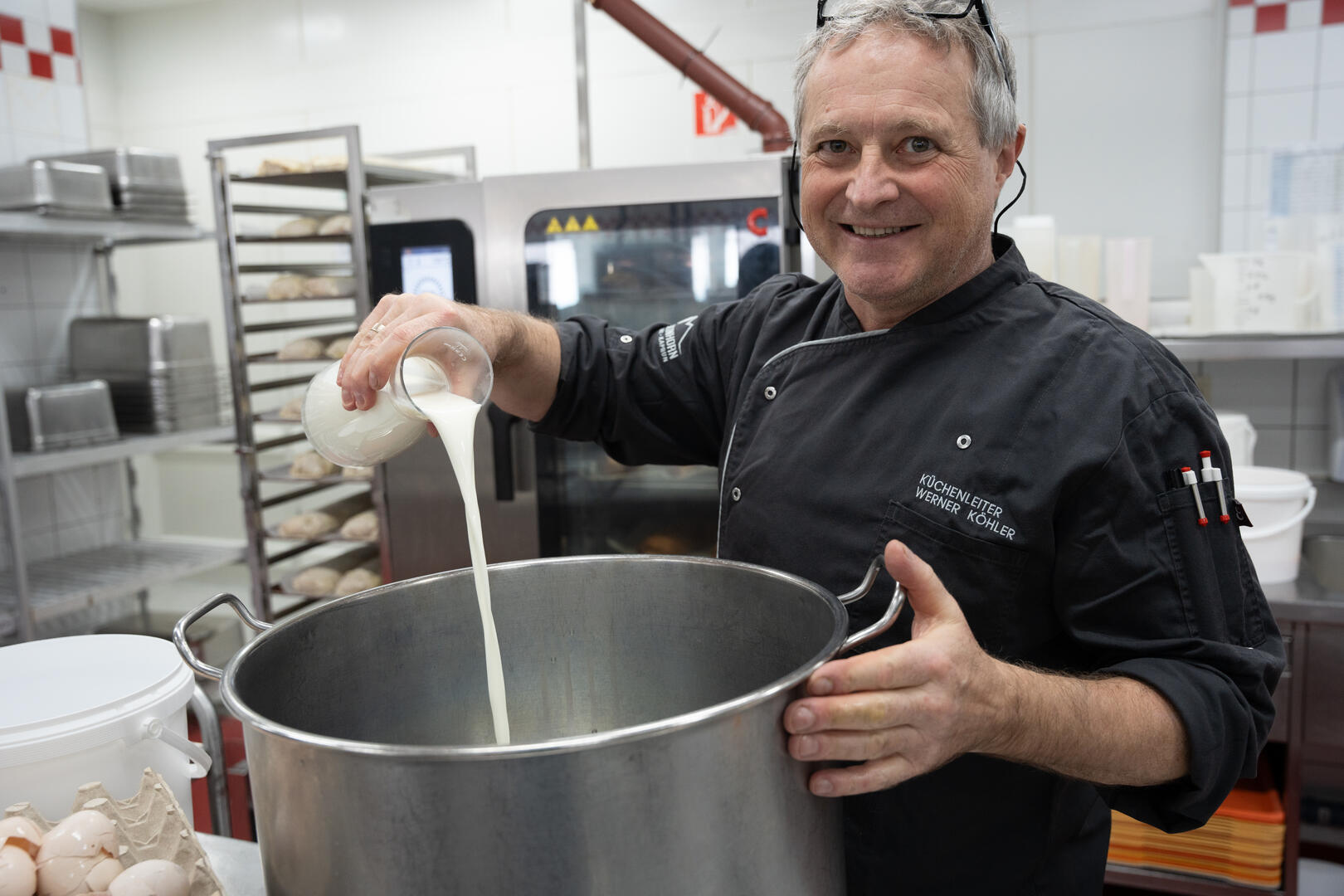
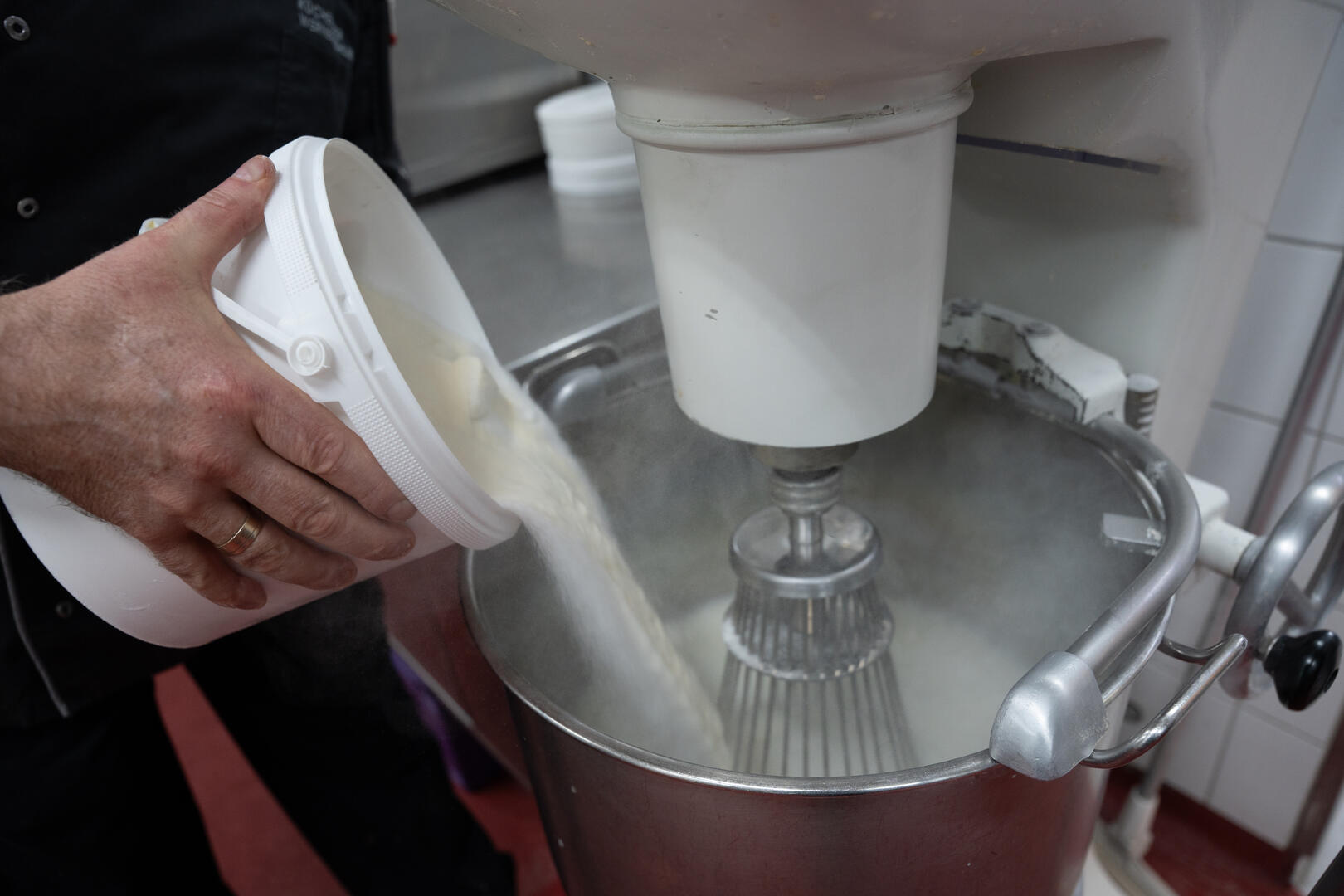
Top Quality at Scale
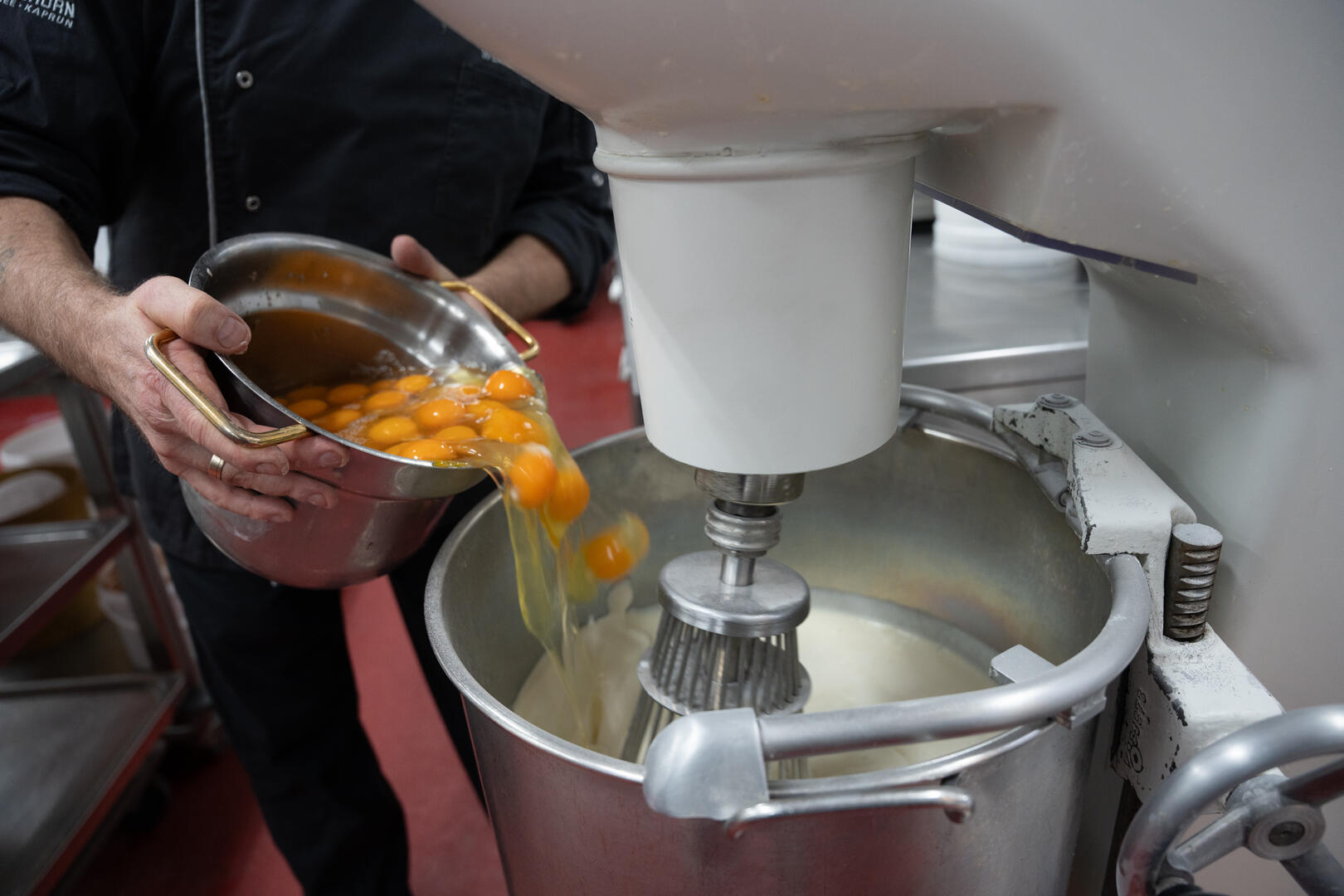
The eggs are cracked by hand and added in a large commercial mixer to the mixture of milk, flour, sugar, and vanilla sugar.
“We add the eggs at the very end because they should not be overmixed if they are to retain their texture. This gives the Kaiserschmarrn body and its fluffy consistency. The batter is then allowed to rest in the refrigerator so that the flour can slowly combine with the milk and eggs.”
For the next batch, the Executive Chef takes rested batter from the refrigerator and leads us to a large tilting skillet.
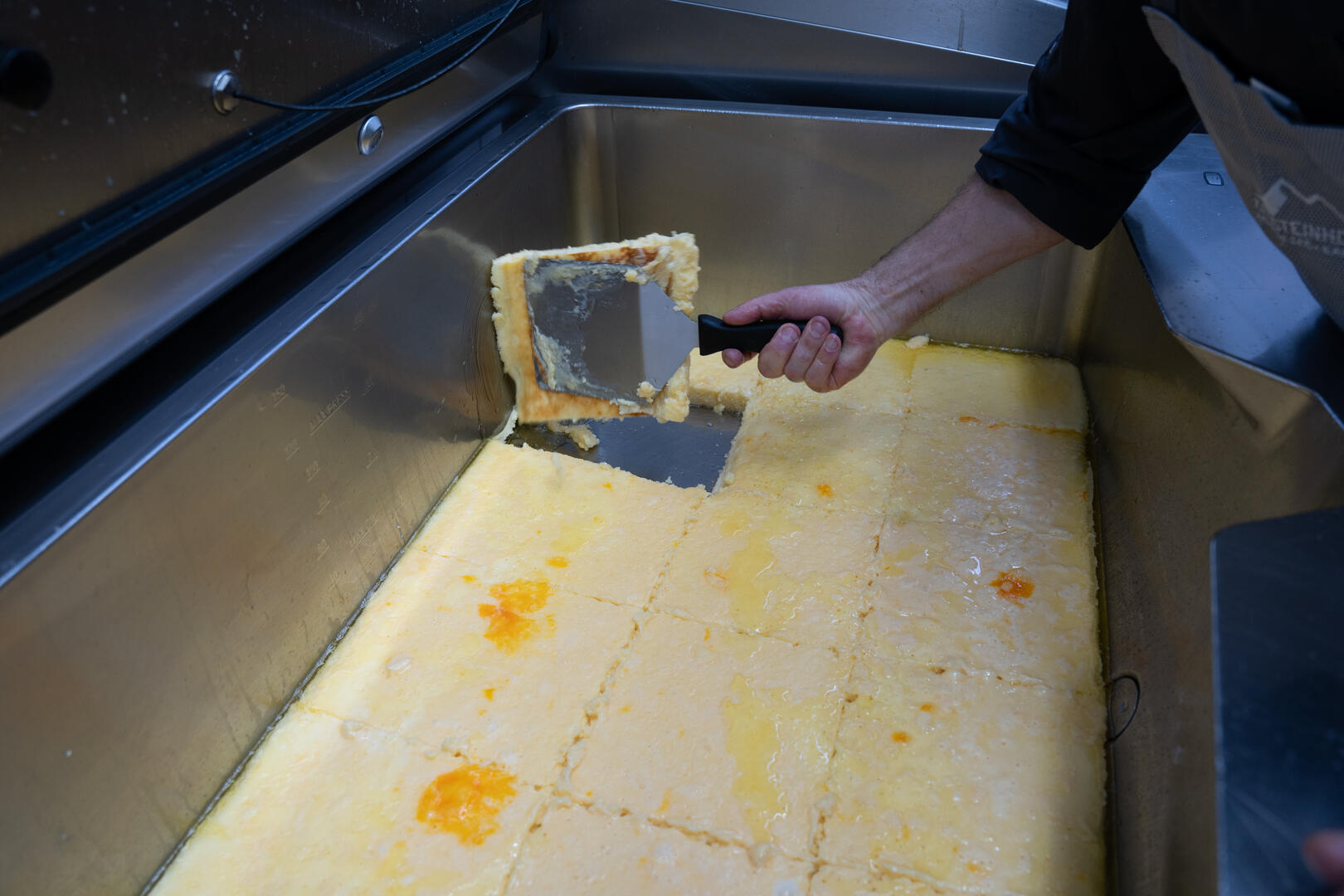
“The process for preparing one serving in a small skillet is exactly the same as preparing several servings in the large tilting skillet. There is no difference in flavor, of course, and this allows us to meet the high demand at the food station during lunchtime.
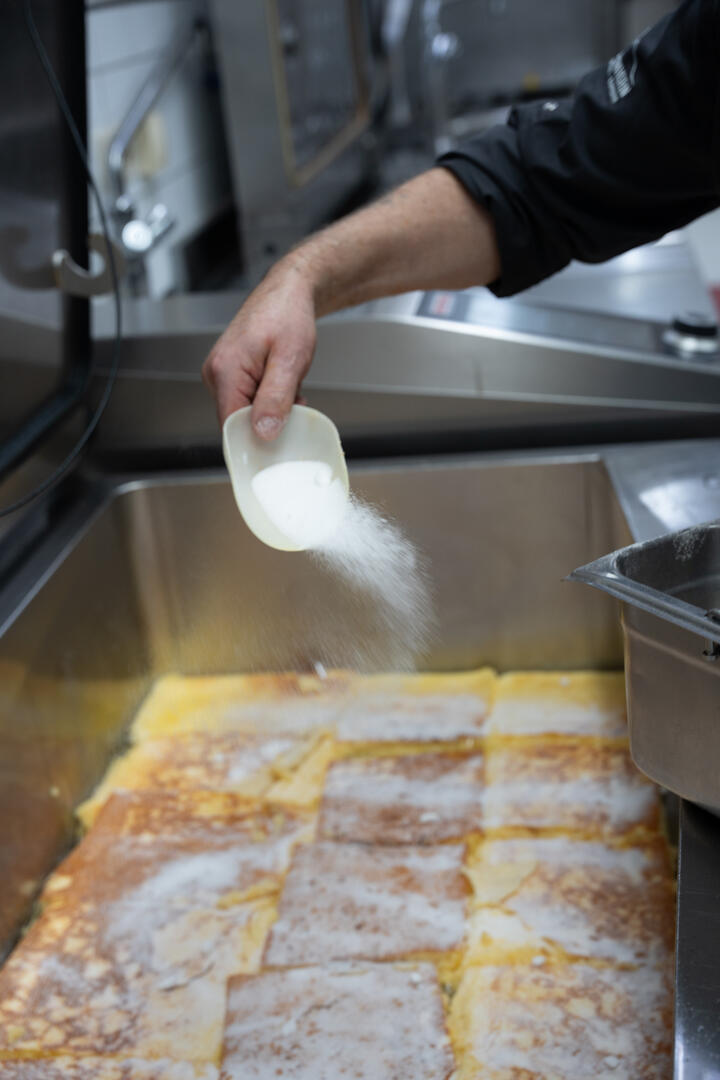
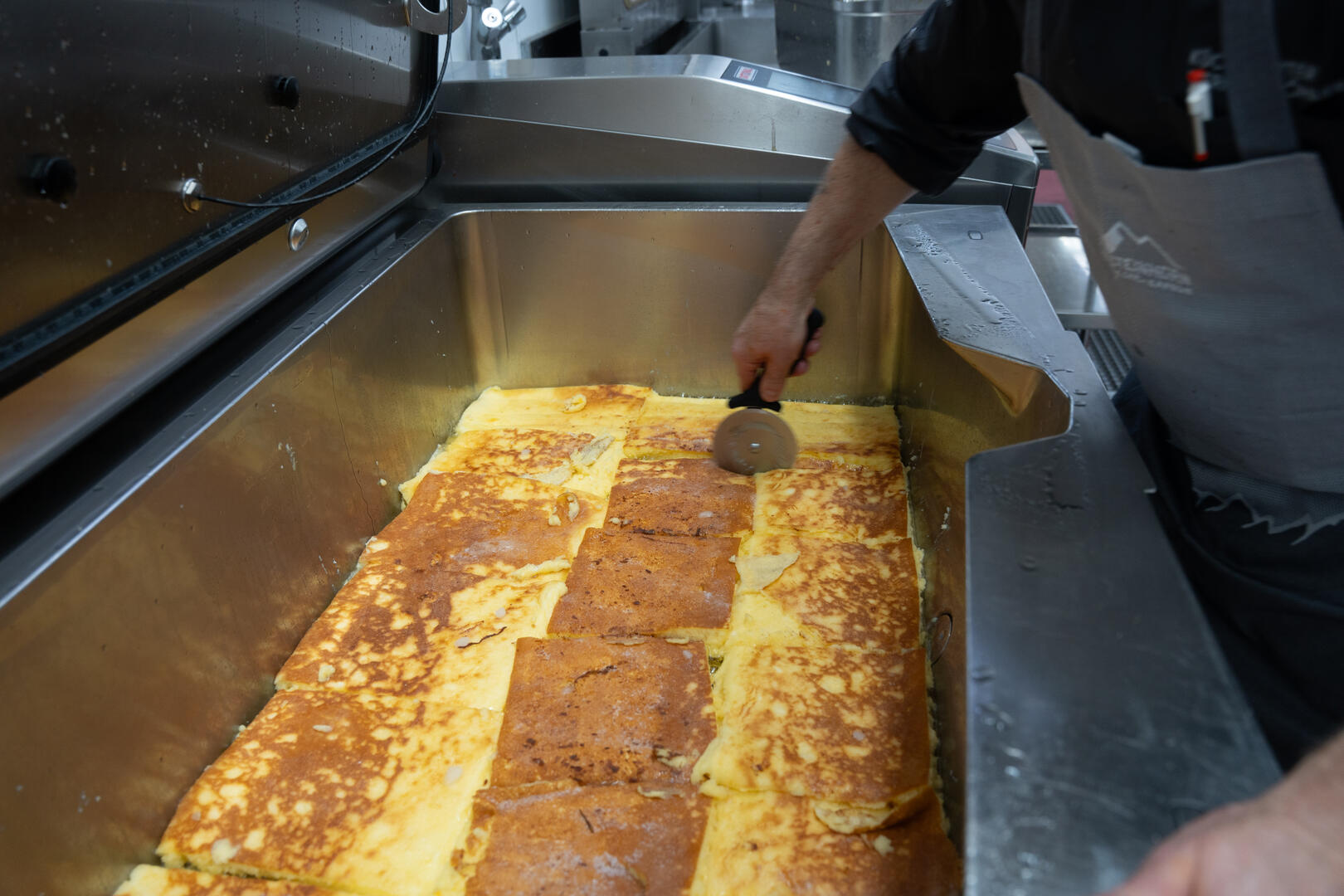
“After the covered batter has cooked on one side over moderate heat, I turn it. To do that, I cut it into larger pieces so that it can be turned gently with a spatula. Sugar is then spread evenly across the surface before the Kaiserschmarrn is covered and slowly caramelized. Once again, it needs a little time—and we give it that time.”
While we wait, Werner Köhler tells us where the eggs come from:
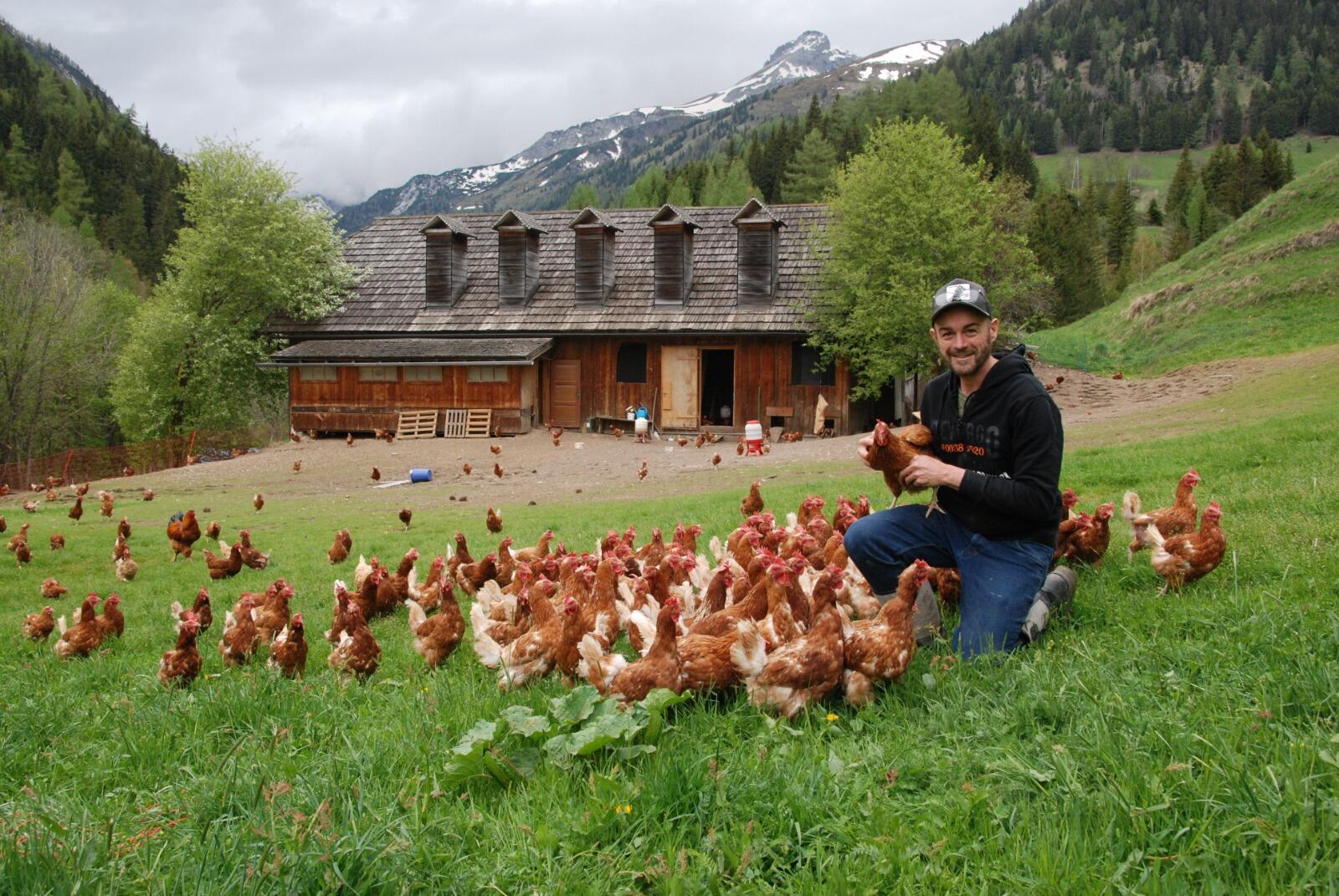
“We source the eggs for our Kaiserschmarrn—as well as for Tyrolean Gröstl, our pastry kitchen, and other dishes—from Waldhof Kösslergut farm in Lungau. The free-range eggs represent sustainability, regional sourcing, and the highest standards of animal welfare.
“Max Prodinger keeps his feathered ladies in small flocks with a few roosters in Zederhaus. In this small Lungau community, he is known as the ‘Henadate,’ which means something like ‘chicken father.’ He earned the name because he gives former laying hens a happy retirement. At Kösslergut farm, they are free to lay as many—or as few—eggs as they like.”
The Tear Test
Now it is time to wake the Kaiserschmarrn from its Sleeping Beauty slumber. We open the skillet and are instantly enveloped in a cloud of delicious aromas. Even people who do not usually have much of a sweet tooth will find it difficult to resist this winter sports favorite.
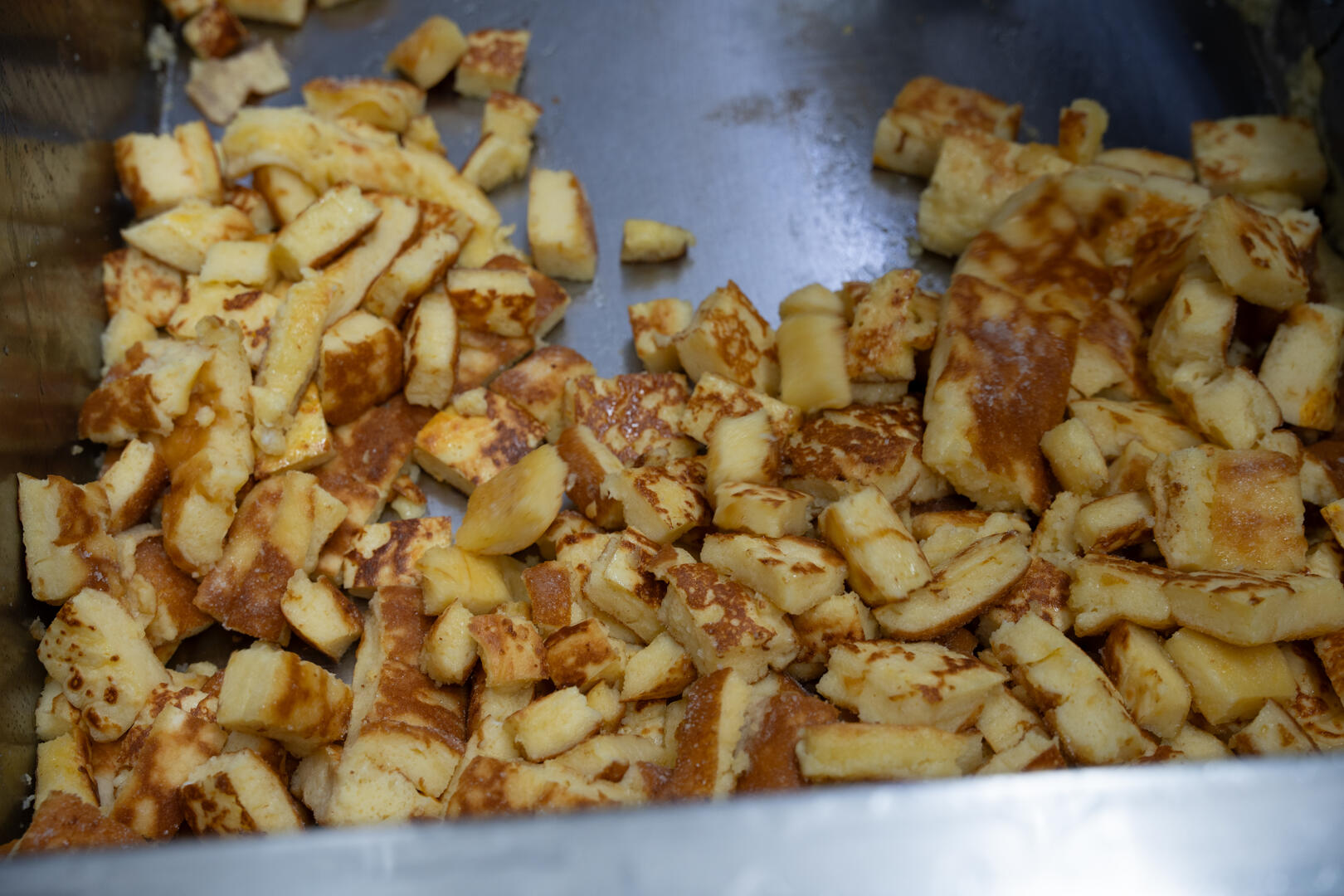
“For a small serving, we would now tear the Kaiserschmarrn apart using a ‘Muasa,’ a traditional spatula. But for this amount, a rolling cutter is more efficient,” the culinary professional explains as he quickly transforms the large pieces into bite-sized morsels.
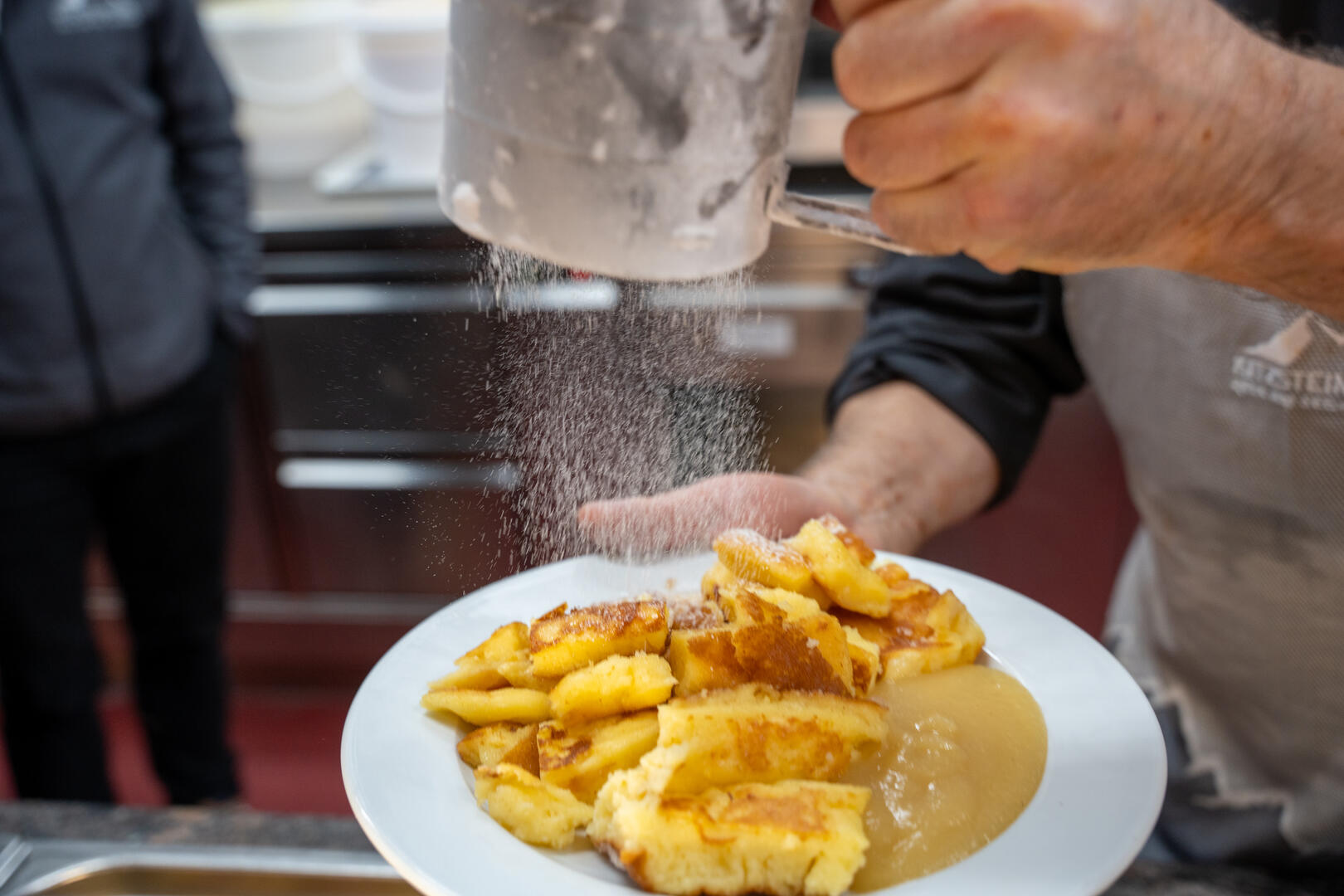
The fresh batch is immediately lifted from the skillet and delivered to the food station. There, it lands on guests’ plates with applesauce and a generous cloud of powdered sugar.
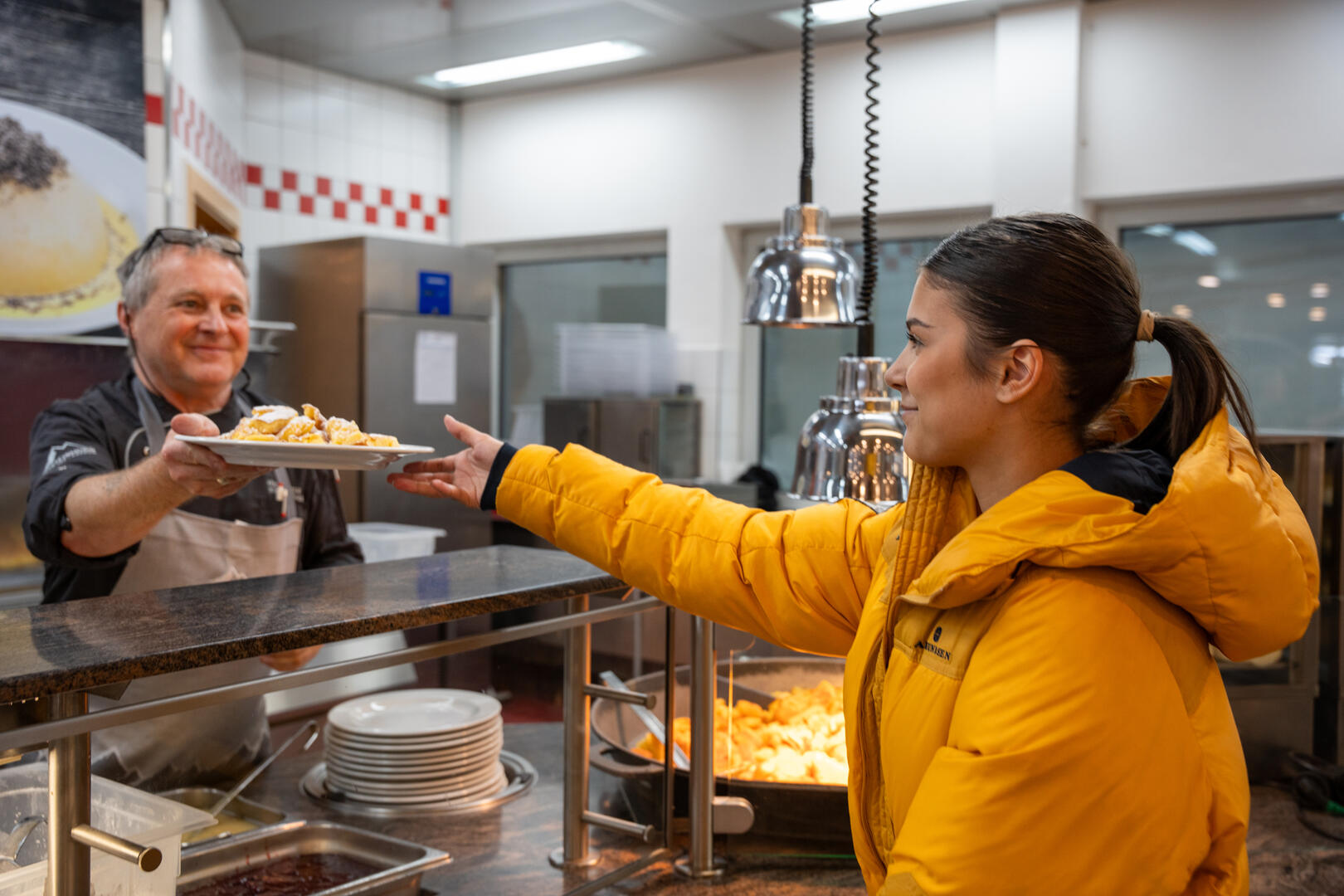
One taste confirms that this Kaiserschmarrn was prepared with fresh ingredients, plenty of time, and a great deal of care. One taste is therefore not enough—we immediately return to the food station to have another generous serving of melt-in-your-mouth Kaiserschmarrn piled onto our plate.