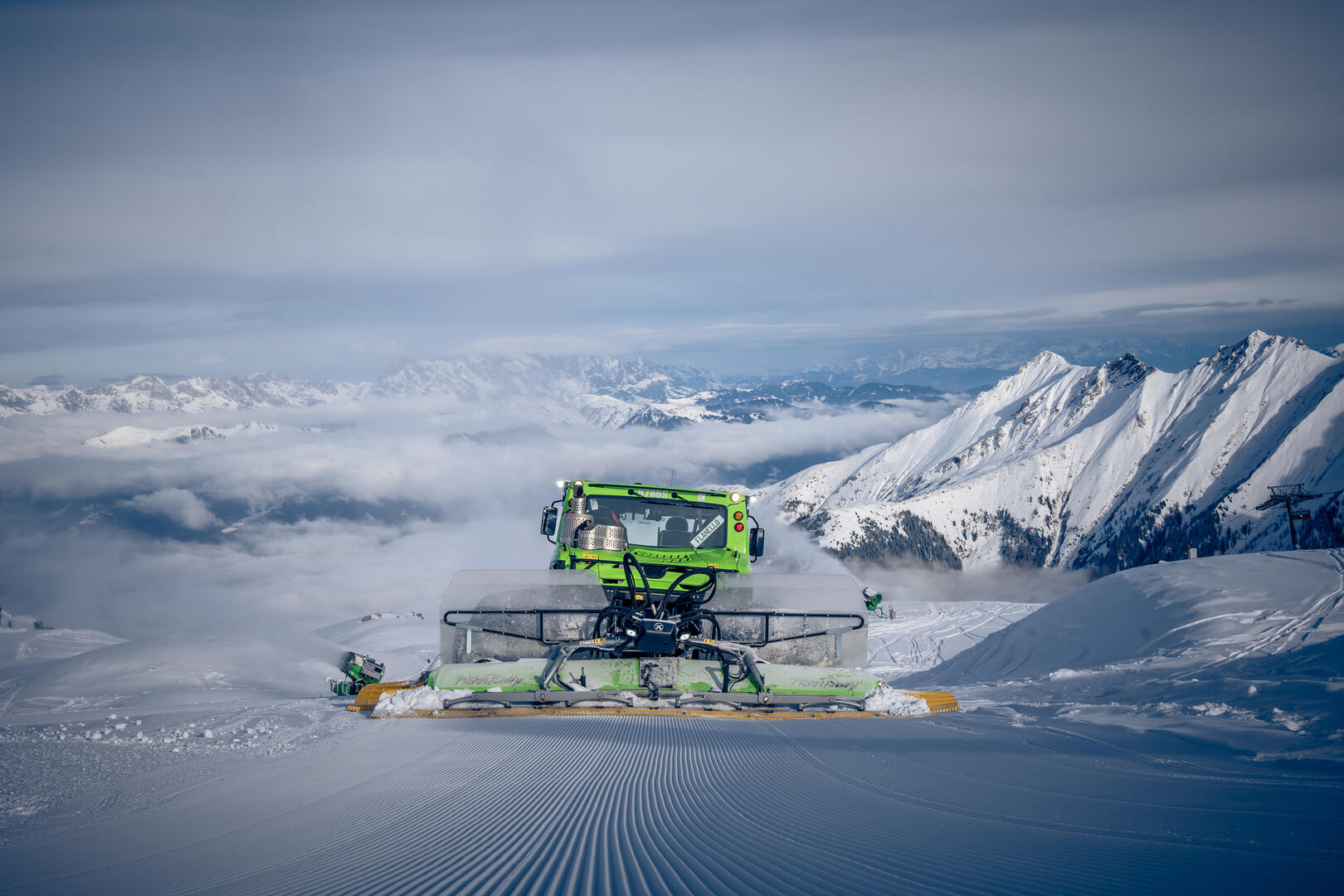

HVO100 at Kitzsteinhorn
What began as a real-world trial on the Maiskogel in winter 2022/23 has now been fully implemented across Kitzsteinhorn and Maiskogel: Since winter 2023/24, Gletscherbahnen Kaprun AG has operated all of its diesel-powered snow groomers and heavy machinery with the fossil-free fuel HVO100. Compared with fossil diesel, HVO100 produces around 90% fewer CO₂ emissions. This saves the company approximately 1,300 metric tons of CO₂ each year.
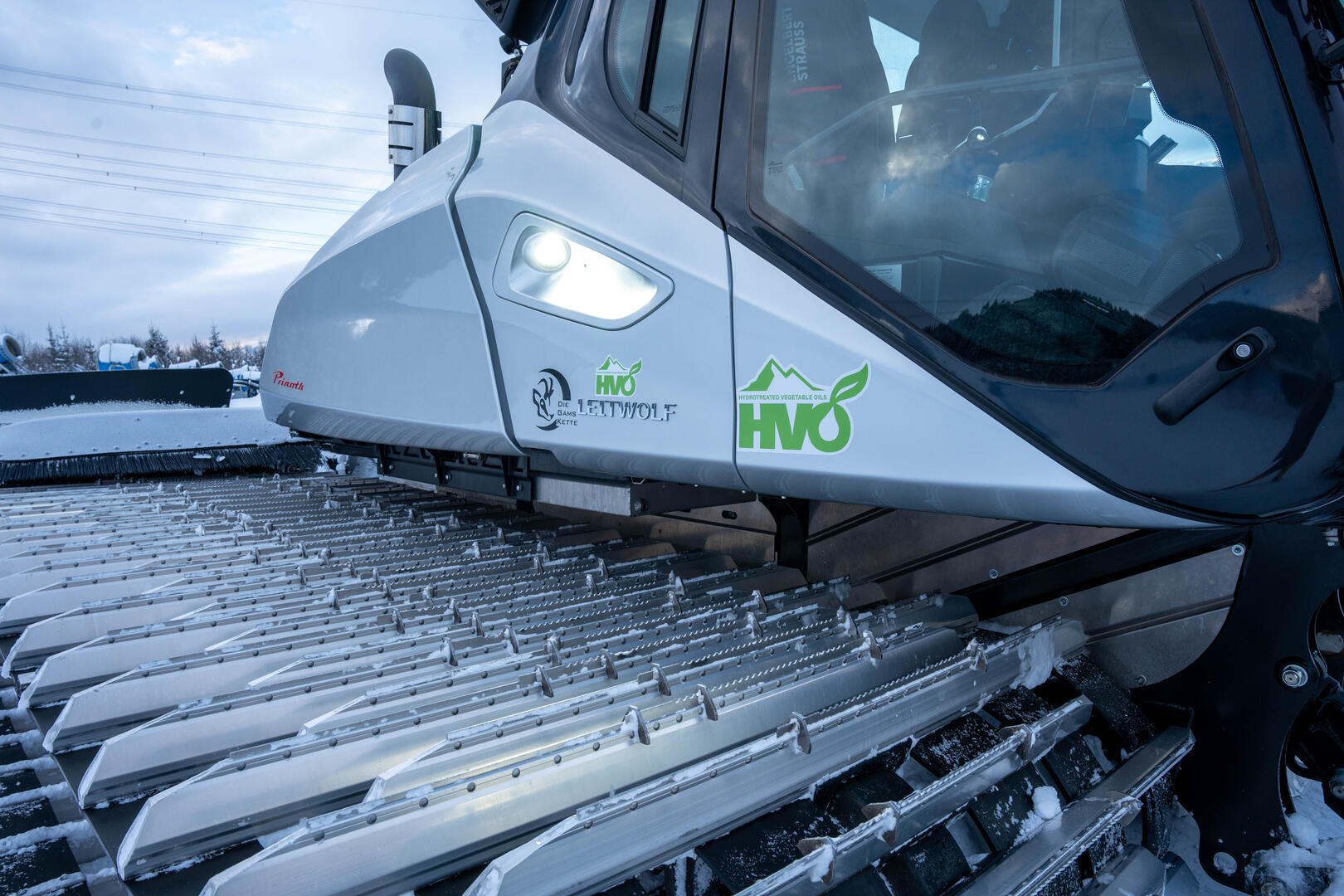
HVO stands for “hydrotreated vegetable oil.” This renewable diesel alternative is produced from waste and residual materials such as used cooking oils and fats. HVO100 can be used in approved diesel engines without any technical modifications.
Putting HVO100 to the Test
During our visit to the mid-station of the MK Maiskogelbahn at the time, the slopes had already been groomed to perfection. At the snow groomer garage, we met Alois Kapeller, who has been part of the Maiskogel grooming team for many years and helps ensure excellent slope conditions.
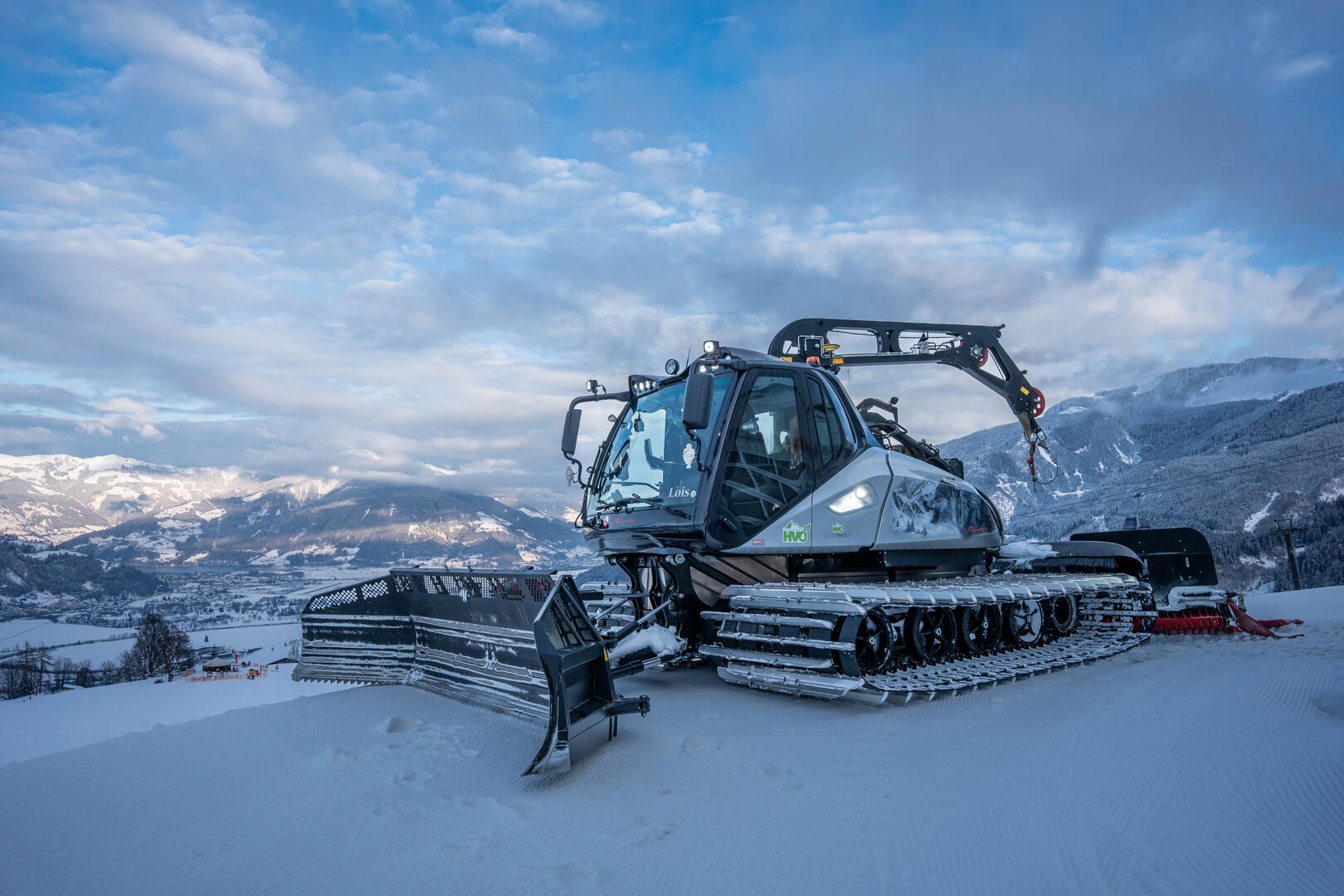
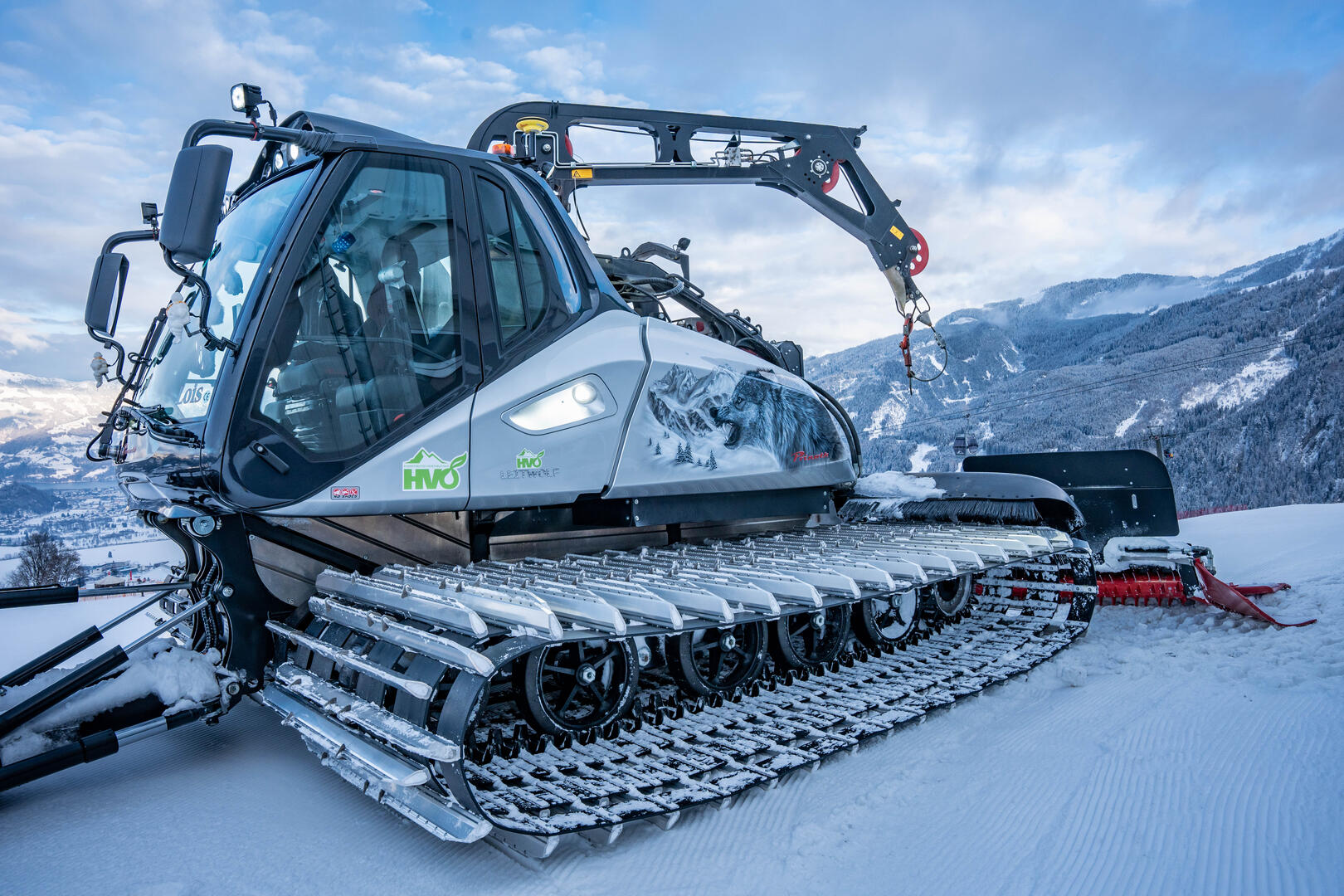
During his night shifts, his workplace is a modern Prinoth Leitwolf equipped with a winch. The snow groomer features a custom airbrushed wolf design—a fitting reference to its Leitwolf model name. Because Alois spends many hours in the cab, he takes particular care to keep it clean and well maintained.
During the trial winter, the entire Maiskogel snow groomer fleet was fueled with HVO100 for the first time. Neither the fuel tanks nor the engines had to be modified or cleaned. The transition took place directly at the existing fuel pump, and any remaining fossil diesel in the tanks posed no problem.

Reliable Even in Extreme Cold
During the trial, HVO100 impressed with its clean, virtually odorless combustion. Even at low temperatures, there was no loss of performance. Fuel consumption and the established snow-grooming routines remained unchanged.
Every night, two snow groomers were in operation on the Maiskogel to restore the slopes to optimal condition for the following morning. Nothing changed for the drivers with the new fuel: fill the tank, start the engine, and groom the slopes as usual.
Lower Emissions, Full Performance
The results of the real-world trial confirmed the significant emissions benefits of HVO100 compared with fossil diesel:
- around 90% fewer CO₂ emissions
- up to 33% less fine particulate matter
- around 9% fewer nitrogen oxide emissions
- around 24% less carbon monoxide
- around 30% fewer hydrocarbon emissions
At the same time, engine performance remained unchanged, even at extremely low temperatures.
From Pilot Project to Standard Practice
Following the successful trial on the Maiskogel, the fuel storage facilities at Kitzsteinhorn and Maiskogel were filled with HVO100 in fall 2023. Since winter 2023/24, the fuel has replaced fossil diesel throughout the entire snow groomer fleet and in all other diesel-powered heavy machinery operated by the company.
Although HVO100 is more expensive than conventional diesel, it significantly reduces the company’s operational carbon footprint without requiring technical modifications to vehicles and machinery or changes to snow-grooming procedures. Across the entire fleet, this saves approximately 1,300 metric tons of CO₂ each year.
For Alois and his colleagues, the goal remains the same: to prepare the slopes for optimal conditions and perfect first runs the following morning. The difference is in the tank—and in the significantly lower CO₂ emissions.